
What Is a Chief Data Officer in 2026? Many people working within the data industry are saying the same thing: the role of the Chief Data Officer (CDO) has changed – but how? CDO Magazine began an expert survey to find out. We recent...
Generative + Agentic AI: Moving From Experimentation to Enterprise Scale Generative and agentic AI are making their way into enterprise production, bringing new questions for Chief Data Officers (CDOs) and other data and AI leaders responsible for making these technologies...
Webinar | The Agentic Mindset Shift: How to Onboard an Agentic Data Team Three sessions, real playbooks, proven results you can replicate.
Community
When AI Results Depend on Data You Don’t Own: San Francisco Leaders Confront the Production Challenge
At CDO Magazine’s San Francisco Executive Boardroom Dinner, data, AI, and technology leaders considered measurable business outcomes, fragmented data ownership, and why trusted information matters when moving AI into production.

Written by: Camille Prado, Global Editor, CDO Magazine
Updated 12:28 PM EST, November 12, 2026
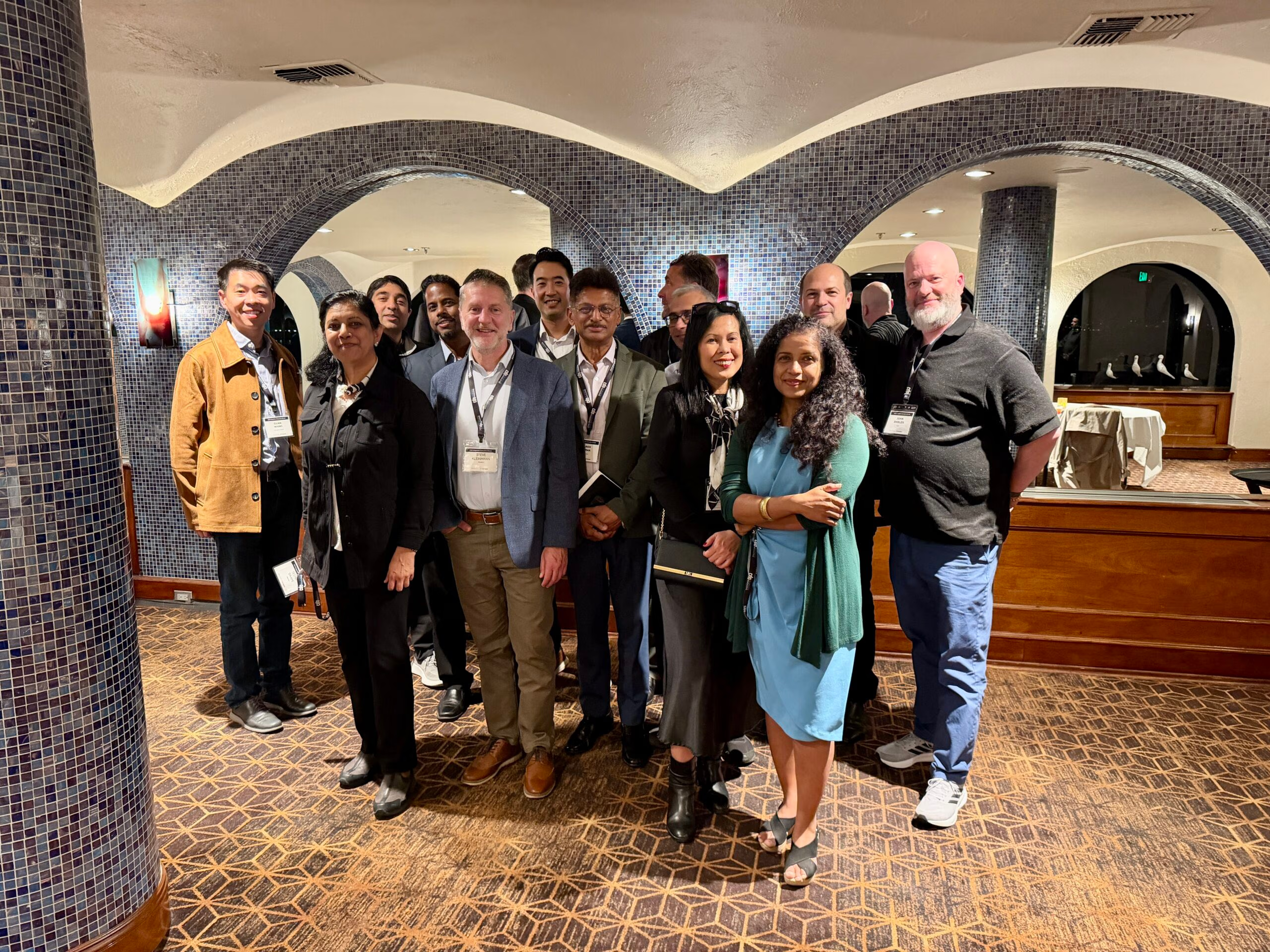
Data, AI, and technology executives gather for CDO Magazine’s San Francisco Executive Boardroom Dinner on November 10.
You can build an AI application, deploy it, and demonstrate that it works. But what happens when the data it needs to deliver meaningful results belongs to another team, sits in a disconnected system, or lacks the context required to make it trustworthy?
That challenge framed the discussion at CDO Magazine’s San Francisco Executive Boardroom Dinner on November 10 at McCormick & Kuleto’s Seafood & Steaks in Ghirardelli Square.
Executives representing financial services, technology, healthcare, retail, and other industries gathered to exchange perspectives on moving AI from experimentation into production.
The conversation focused on two connected questions: how organizations determine whether AI is delivering measurable value, and what happens when responsibility for AI outcomes extends beyond the data a team directly controls.
The AI Win: What Actually Counts?
For organizations investing in enterprise AI, a successful demonstration is only the beginning.
The more consequential question is whether an AI initiative has delivered something meaningful to the business.
The leaders were invited to consider examples of AI efforts that produced tangible results and how their organizations determined whether those efforts were working.
That distinction matters because technical performance and business performance are not necessarily the same.
An AI application might function as designed without creating measurable improvements in the processes, decisions, or outcomes that matter to the organization.
The discussion framework also encouraged executives to consider what business leaders, including CEOs and CFOs, would recognize as meaningful evidence of success.
These questions moved the conversation beyond the number of AI projects underway and toward the value those projects ultimately create.
When Accountability Exceeds Data Ownership
The second discussion question introduced a challenge that can complicate even promising AI initiatives: organizations often expect teams to deliver results using data they do not own.
Data may be distributed across departments, business units, applications, and external partners.
The people responsible for implementing AI may not have direct authority over the information required to make those systems effective.
That creates questions extending beyond technical integration.
Who is responsible for making data usable? What happens when critical information is incomplete or unavailable? And how can organizations address these dependencies without allowing them to undermine AI initiatives?
The San Francisco executives considered situations where limited control over data had affected an AI effort, including what might have changed the outcome.
The relationship between data ownership and accountability is especially relevant as organizations move from isolated experimentation to AI applications that must operate reliably within established business processes.

Executives exchange perspectives during CDO Magazine’s San Francisco Executive Boardroom Dinner, where the discussion focused on AI business outcomes and the challenges of distributed data ownership.
Data Primacy and the Path to Production
For Alakh Verma, Everpure Strategic Advisor, Data and AI, the evening’s conversation reinforced the importance of treating enterprise data as a strategic foundation for AI.
Verma reflected:
“What impressed me most was the depth and maturity of perspectives shared by the leaders around the table. The conversation went beyond AI hype and technology experimentation to address the real enterprise challenges of trust, governance, data readiness, scalability, and measurable business outcomes. This is precisely the leadership mindset required to translate AI innovation into sustainable business value.”
His observation connects the two central questions.
Measurable AI outcomes depend not only on the capabilities of the technology but also on whether organizations can provide the information needed to support reliable decisions.
Verma emphasized that point in a second reflection:
“The success of Enterprise AI will not be determined by algorithms or AI models alone. It will be determined by the intelligence, quality, accessibility, and trustworthiness of the data behind them. Organizations must move from treating data as an IT asset to recognizing it as a strategic business differentiator. Data Primacy is the new competitive advantage in the AI economy.”
The distinction between data as a technical resource and data as a business differentiator is particularly relevant when organizations are evaluating which AI initiatives deserve continued investment.
It also places greater importance on data quality, accessibility, and trust as organizations pursue production-scale applications.

Alakh Verma, Everpure Strategic Advisor, Data and AI, shares perspectives during CDO Magazine’s San Francisco Executive Boardroom Dinner.
Where Governance Can Accelerate Progress
The evening’s discussion framework also raised a question that challenges a familiar assumption about enterprise governance:
Where has governance actually made an organization faster?
While governance is sometimes viewed primarily as a control function, well-defined responsibilities, trusted data, and clear processes can reduce uncertainty when organizations deploy AI.
That becomes particularly important when multiple teams share responsibility for the data and systems supporting an initiative.
Rather than treating governance as separate from AI delivery, organizations must consider how their existing practices can support reliable access to information and help teams move forward with confidence.
For the San Francisco executives, the broader challenge was connecting the technical requirements of AI with the organizational responsibilities necessary to sustain it.
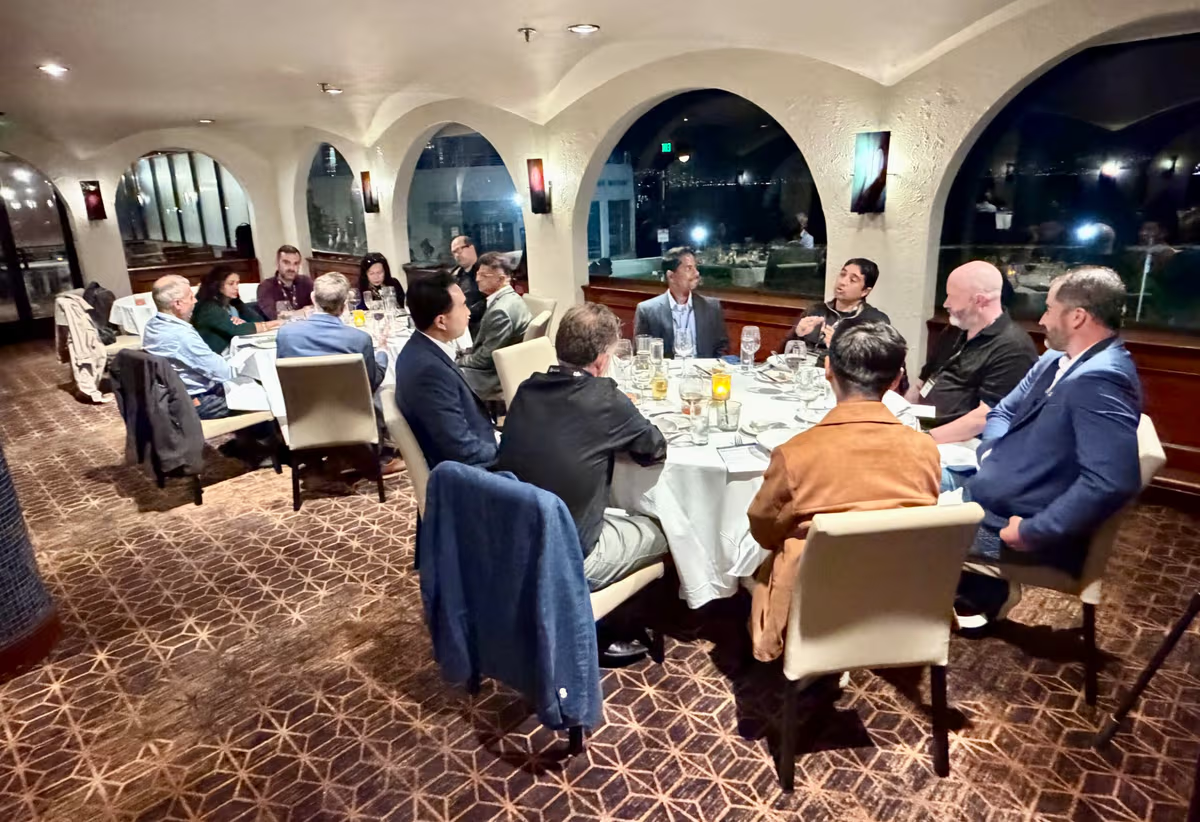
Data and technology leaders participate in an executive discussion on AI production readiness, governance, and measurable business value at CDO Magazine’s San Francisco gathering.
Data, AI and Technology Leaders Who Joined the San Francisco Conversation:
- Nadeem Chaudhry, Bungalow Head of Applied AI
- Chitrang Dave, Immunic Therapeutics Chief Data & Digital Officer
- Harnalli Deepa Swamy*, Former Forge SVP, Global Head of Data, AI, ML & Analytics Platforms
- Brian Dempsey, Robert Half VP, Managed Technology Solutions
- Patrick Eibl, OVAL Director, Investments and Corporate Development
- Steve Kleinmann, Moody’s Senior Director, Industry Practice Lead, Master Data Solutions
- Patrick McQuillan, Visa Global Head of Enterprise AI & Data Strategy
- Jean-Paul Saliou, Augura CTO
- John Shields, ETR Director of Data Strategies & Insights
- Prasad Suravarapu, BMO Vice President, Enterprise Data Management
- Seema Swamy, Walmart Senior Director, Insights and Data Analytics – Last Mile Delivery/Strategic Initiatives
- Guan Wang, Diversis Capital Head of AI and Data
- Lilly Zoltak, J.P. Morgan Wealth Management Private Client Advisor & VP of Investments
- Jason Ma, Everpure Head of AI & Analytics Product
- Patricia Scupeliti, Everpure Director, America’s Commercial Marketing
- Alakh Verma, Everpure Strategic Advisor, Data and AI
- Anthony Losanno, CDO Magazine Managing Director
*Harnalli Deepa Swamy is a CDO Magazine Global Board member.
CDO Magazine thanks Everpure for supporting the San Francisco Executive Boardroom Dinner and helping bring the regional data, AI, and technology community together.
Join San Francisco’s Data & AI Executive Community
Meaningful progress often begins with conversations among leaders who understand the challenges of turning data and AI investments into business results.
CDO Magazine’s San Francisco executive community connects senior data, AI, and technology leaders across industries to exchange experiences, build relationships, and learn from one another.
Want a seat at the table next time?
Connect with Corey Maxner, CDO Magazine Senior Director, Community, to learn more about upcoming executive gatherings in San Francisco.



 Elevate Your Personal Brand


