
What Is a Chief Data Officer in 2026? Many people working within the data industry are saying the same thing: the role of the Chief Data Officer (CDO) has changed – but how? CDO Magazine began an expert survey to find out. We recent...
2026 CDO Report: Meet the Modern Data Team New survey of VP & C-level data and AI leaders confirms what’s stalling AI transformation.
Generative + Agentic AI: Moving From Experimentation to Enterprise Scale Generative and agentic AI are making their way into enterprise production, bringing new questions for Chief Data Officers (CDOs) and other data and AI leaders responsible for making these technologies...
Community
When AI Pilots Work but Still Don’t Make It: New York Leaders Dig Into the Production Gap
Inside a candid New York conversation about the business, data and ownership decisions that can determine whether enterprise AI survives beyond the proof of concept.

Written by: Camille Prado, Global Editor, CDO Magazine
Updated 5:32 PM EDT, October 8, 2026
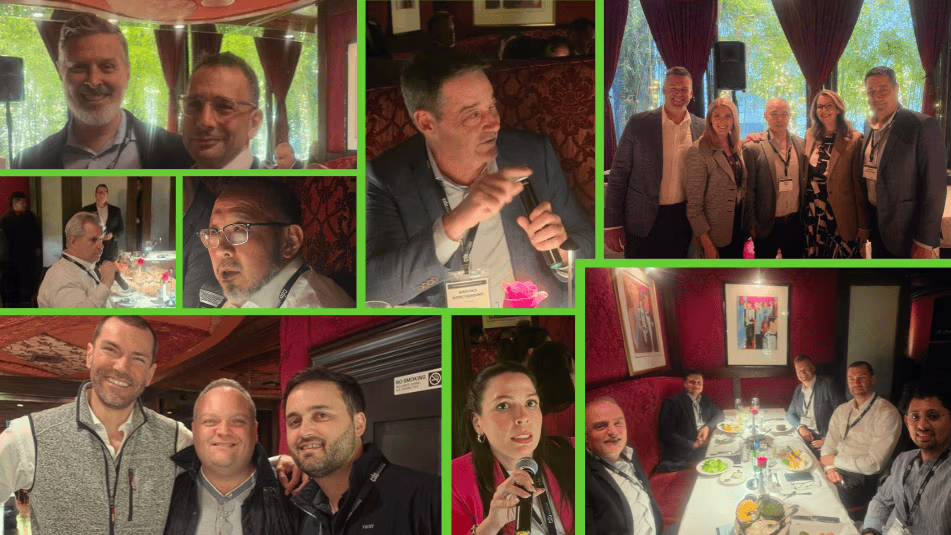
Data, AI and technology leaders gather in New York for the CDO Magazine Executive Boardroom Dinner on October 6, 2026.
Launching an AI pilot is one thing. Keeping it running, useful and accountable in production is another.
That gap brought data, AI and technology leaders together at the CDO Magazine New York Executive Boardroom Dinner on October 6 at Club A Steakhouse. The evening’s topic, From Pilot Graveyards to Production AI: Why Most Enterprise AI Initiatives Fail—and How to Fix Them, gave the group a starting point for a broader conversation about what happens after an AI proof of concept shows promise.
Rather than debating AI’s potential in the abstract, executives compared the practical challenges that emerge as organizations try to turn experimentation into something durable. Is the initiative tied to a real business problem? Is the underlying data ready? Who takes ownership when the project reaches production? And who is responsible for keeping it useful, governed and supported after the team that built it moves on?

Lisa Cheng, JPMorganChase Product Manager-Payment, shares her perspective during the New York Executive Boardroom Dinner.
A Successful Pilot Is Only the Beginning
The discussion guide opened with a deceptively simple question: How many AI pilots or proofs of concept have organizations launched over the past 12 to 18 months, and how many are actually in production and still running?
From there, the questions moved quickly beyond technical performance.
A model can work. A demonstration can impress. A proof of concept can do exactly what it was designed to do. None of those things, on their own, guarantee that an AI initiative has a viable path into the business.
That distinction sat at the center of the evening. Leaders were invited to consider what happens when projects begin with the desire to “do AI” rather than with a clearly defined business problem and measurable outcome. They also examined what organizations might do differently if they could revisit the AI decisions they made a year ago.
Gerri Caveness, CDO Magazine Community Director, summed up the mood afterward:
“Apparently, ‘From Pilot Graveyards to Production AI’ was less of a dinner topic and more of a group therapy session. Somewhere along the way, I’m pretty sure we discovered where a few AI pilots are buried. Names have been withheld to protect the guilty!
I’d tell you more about what an epic time that was, but Chatham House Rule is a rule for a reason. And you know it’s a great party when people are still talking an hour after the official hard stop.
Pythian, you really know how to raise the dead!”
Her take was playful, but the underlying point was serious. These were not hypothetical problems. The discussion gave leaders an opportunity to compare the questions and challenges they are confronting as AI moves from experimentation toward day-to-day enterprise use.
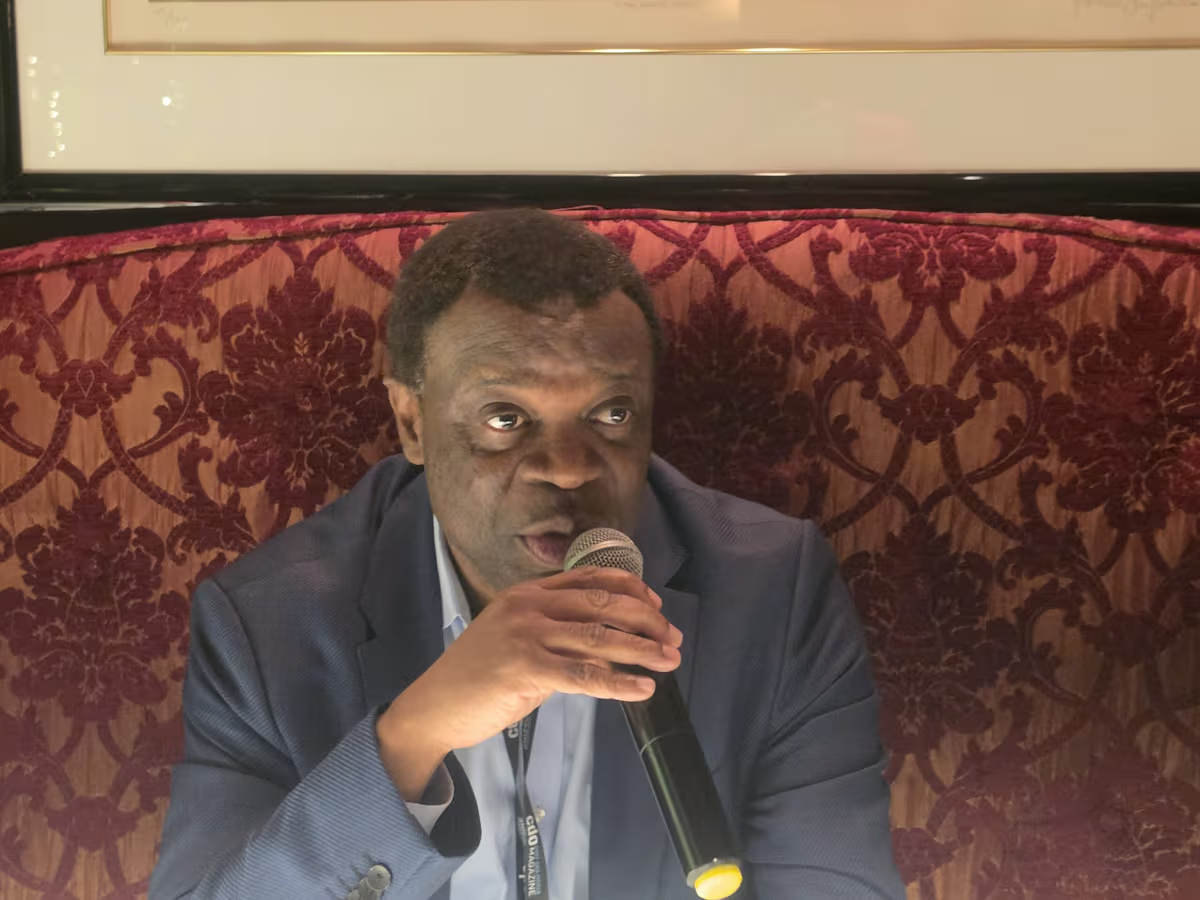
Alain Biem, (Former) New York Life Chief Data Science Officer joins the discussion as New York data, AI and technology leaders exchange perspectives on moving AI initiatives from pilot to production.
The Business Problem Comes Before the AI
One of the central themes was what the discussion guide called the “North Star Problem”: whether an AI initiative begins with a real business need or with the technology itself.
For organizations trying to reach production, that distinction can shape everything that follows. A technically successful project can still struggle to gain traction if its purpose, business owner or measures of success were never clear.
The conversation explored how organizations can connect AI initiatives to business outcomes and KPIs instead of treating experimentation itself as the objective.
Neha Agarwal, IEX Group Equities Project Management Lead, appreciated that the room left space for questions as well as answers:
“I especially appreciated how open and honest the conversations were – not only about AI’s potential, but also about the questions and uncertainties around its future. And last but not least, it was a great opportunity to meet and exchange ideas with some incredible minds – people who are actively using, building, and driving AI transformation.
As always, it was a great event hosted by CDO Magazine, with thoughtful conversations ranging from AI to the business concepts we often think we understand, and I especially enjoyed reconnecting with and meeting fellow financial professionals and continuing to build a strong industry community.”
That openness is part of what makes peer conversations around AI useful. The value is not in pretending every organization has arrived at the answer, but in hearing how other leaders are approaching many of the same decisions.

Karen Pfeifer, Pythian Field CAIO, moderates the conversation on the challenges organizations face moving AI initiatives into production.
AI Ambition Meets Enterprise Data
Even an AI initiative built around the right business problem eventually has to contend with the data underneath it.
The discussion guide put that tension plainly: AI models often assume clean, integrated, high-quality data, while enterprises may be working across fragmented systems, data quality challenges and other constraints.
That makes data readiness more than a technical prerequisite. It becomes part of the larger question of what an organization is actually prepared to put into production and support at scale.
Giorgi Liklikadze, Zoetis Global Head of People Analytics, pointed to the value of hearing how those challenges look from different industries:
“What stood out to me was the diversity of perspectives across industries and the opportunity to hear how different organizations are approaching AI and the transformation it is bringing to both our daily lives and the business world.”
The differences around the table mattered. Organizations may be operating with different business models, data environments and priorities, but many are wrestling with the same gap between what they want AI to do and what their existing environments can support.
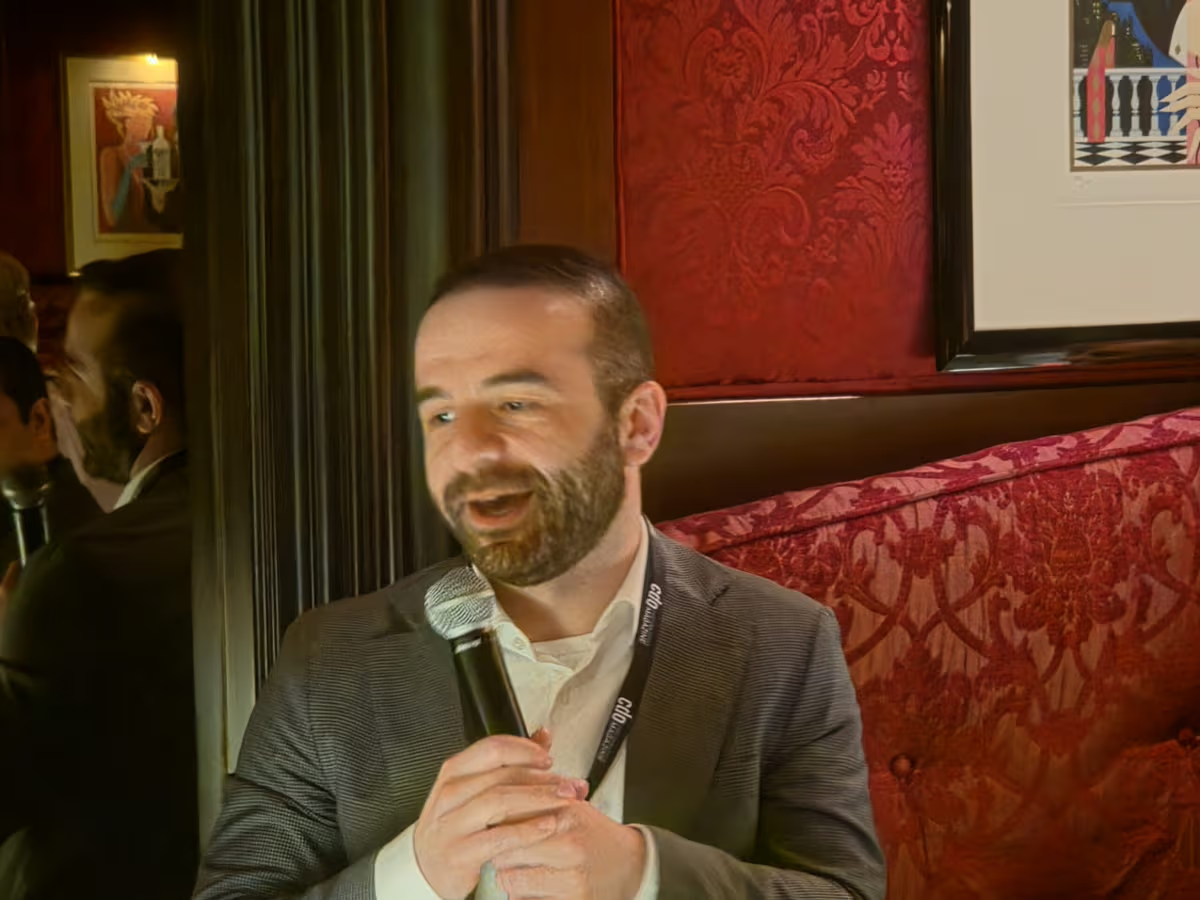
Giorgi Liklikadze, Zoetis Global Head of People Analytics, contributes to the discussion during the CDO Magazine New York Executive Boardroom Dinner.
Then Comes the Ownership Question
Getting an AI initiative into production does not end the work. In some ways, it begins a different kind of work.
Models can degrade. Governance requirements can change. Users need support. Business conditions shift. And the team that developed the original solution may already be focused on something else.
The discussion explored where responsibility sits once a pilot succeeds technically. Who owns the production system? Who responds when performance changes? Who manages evolving governance requirements? What happens when the original data science team moves on?
Those questions shift the definition of AI success. Production is not simply the final technical milestone after a pilot. Sustainable AI also requires ownership, accountability and a plan for what happens after launch.
Karen Pfeifer, Pythian Field CAIO, moderated the discussion, guiding the group through the questions around business outcomes, data realities and long-term ownership.
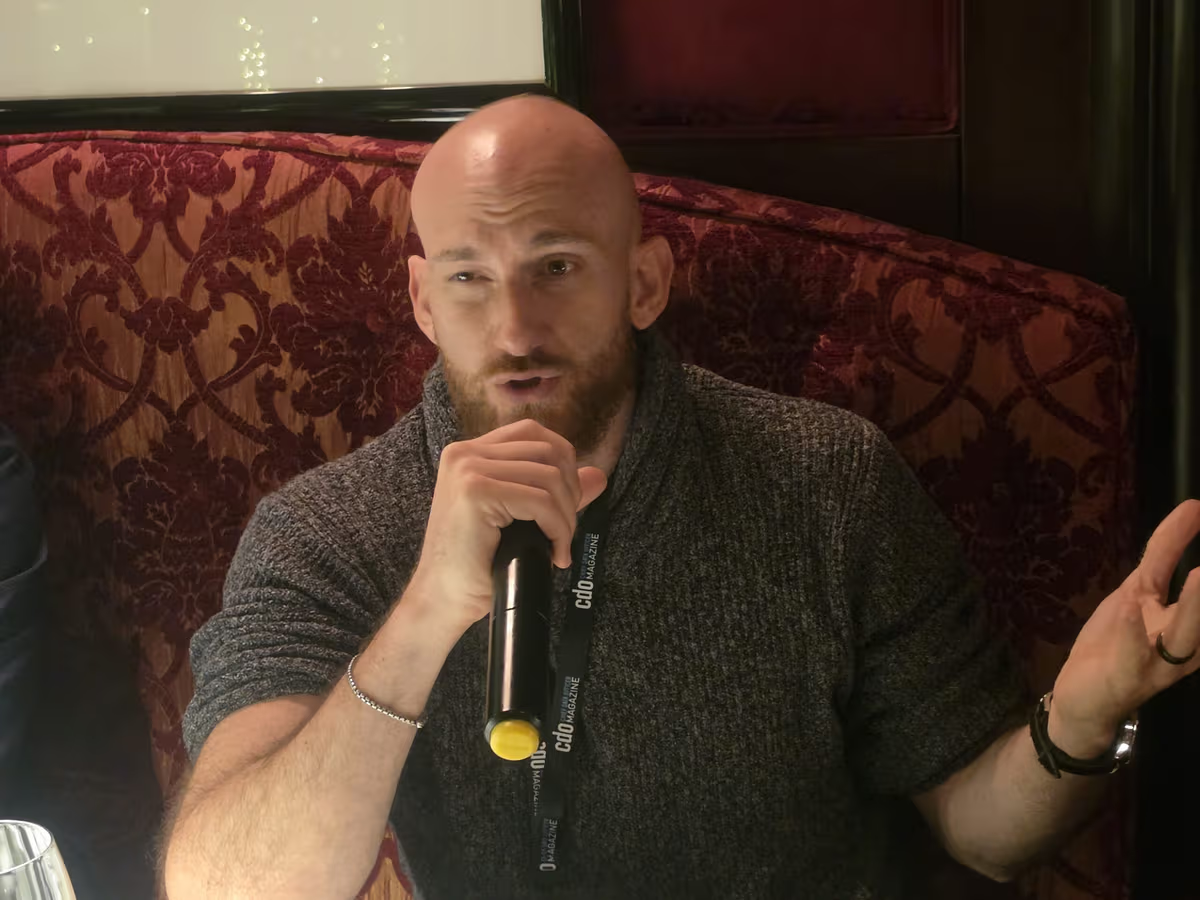
Alaa Moussawi, New York City Council Chief Data Scientist, shares his perspective during the discussion on enterprise AI.
The Conversation Outlasted the Agenda
The formal agenda was scheduled to conclude at 9 p.m. The conversation wasn’t.
Kirill Vakhranev, Citi SVP – AI Program Management & Finance Transformation Lead, described the evening this way:
“Last night’s dinner event hosted by CDO Magazine was another fantastic success! It was great bringing together industry insiders in an intimate midtown Manhattan setting to share ideas, experiences, and outlooks in such an engaging environment.
Gerri was wonderful as master of ceremonies, masterfully navigating the group of roughly 25 invitees on a first-name basis and making introductions for both new and existing members. The lively discussions, laughter, and great banter continued well past the scheduled end time.
It was a wonderful event with great people, and I look forward to future opportunities to connect!”
The fact that attendees kept talking beyond the scheduled end says something about the questions on the table. Moving AI from experimentation to production isn’t one problem with one answer. It touches business priorities, data, governance, ownership and the people expected to make all of it work.
It also underscored the value of getting leaders into a room where they can compare those experiences with peers.
Data, AI and Technology Leaders Who Joined the New York Conversation:
- Neha Agarwal, IEX Group Equities Project Management Lead
- Sung Ho Ahn, DTCC Managing Director, Deputy General Auditor, Clearing & Securities Services, Risk & Data
- Manal Alimari, Sumitomo Mitsui Banking Corporation Head of Enterprise Data Governance and Transformation
- Sol Benjamin, JPMorgan Chase & Co. Vice President, Product Semantic Intelligence & Data Agent Platforms
- Alain Biem, Former New York Life Chief Data Science Officer
- Ipshita Chakraboty, Hello Fresh Director, Data Science & Applied AI – Global Product Strategy & Ops
- Sabrina Chen, AML RightSource North America Head of Financial Crime Analytics
- Lisa Cheng, JPMorganChase Product Manager-Payment
- Girish Gajwani, Barclays Vice President/Architect, Securitized Products Technology
- Stephanie Garland, State of Maryland Director of Data Literacy
- Ann Marie Ippoliti, Former Michael Kors SVP Digital Commerce, Consumer Marketing, Global Analytic
- Akhil Khunger, Barclays Corporate & Investment Bank VP, Quantitative Analytics
- Giorgi Liklikadze, Zoetis Global Head of People Analytics
- Richard Martin, PepsiCo Senior Director Strategy & Transformation – Data, Analytics & AI
- James Massa, JPMorgan Chase & Co Senior Executive Director (L7), Software Engineering and Architecture
- Adriana Minano, Vita Coco Vice President of Technology
- Alaa Moussawi, New York City Council Chief Data Scientist
- Dhru Patel, JPMorgan Chase VP, Digital Wallets
- Ciprian Porutiu, Marsh McLennan SVP, Strategic Initiatives | Change Management | Business Transformation
- Leo Rajapakse, Bimbo Bakeries Global Head of Platform Infrastructure, Digital, & Advanced Technologies
- Sanjay Ramchandani, Wells Fargo VP, Enterprise Marketing, Data and Integration
- Andrew Reiskind, MasterCard Chief Data Officer
- Wilmarie Rios, Synchrony VP, Head of Internal Consumer & Partner Data Solutions
- Alex Rosenzweig, American Express (Formerly) Director, Data AI Risk & Controls
- Tyler Stemm, Vita Coco Manager, Data Analytics & Engineering
- Kirill Vakhranev, Citi SVP – AI Program Management & Finance Transformation Lead
- Brooks Borcherding, Pythian Chief Executive Officer
- Ian Cascagnette, Pythian Chief Financial Officer
- Lindsay Dubin, Pythian Vice President, Sales
- Benny Louie, Pythian Sales Executive
- Karen Pfeifer, Pythian Field CAIO
- Gerri Caveness, CDO Magazine Community Director
- John Vulopas, CDO Magazine Account Director
CDO Magazine thanks Pythian for supporting the New York Executive Boardroom Dinner and helping make the evening’s exchange possible.
And thank you to the leaders who filled the room with the experiences, questions and perspectives that made the conversation worth extending past the agenda. Enterprise AI may be moving quickly, but there is real value in having a place where leaders can compare what is actually happening inside their organizations, including what works, what doesn’t and what they are still trying to figure out.



 Elevate Your Personal Brand