
What Is a Chief Data Officer in 2026? Many people working within the data industry are saying the same thing: the role of the Chief Data Officer (CDO) has changed – but how? CDO Magazine began an expert survey to find out. We recent...
Generative + Agentic AI: Moving From Experimentation to Enterprise Scale Generative and agentic AI are making their way into enterprise production, bringing new questions for Chief Data Officers (CDOs) and other data and AI leaders responsible for making these technologies...
Webinar | The Agentic Mindset Shift: How to Onboard an Agentic Data Team Three sessions, real playbooks, proven results you can replicate.
Community
The AI Pilot Worked. Can the Organization Scale It? Milwaukee Data Leaders Weigh In
At CDO Magazine’s Milwaukee Roundtable Exchange, executives examined why moving AI into production requires stronger data foundations, clear accountability, cybersecurity readiness and a plan for changing how people work.

Written by: Camille Prado, Global Editor, CDO Magazine
Updated 1:52 PM EDT, October 23, 2026
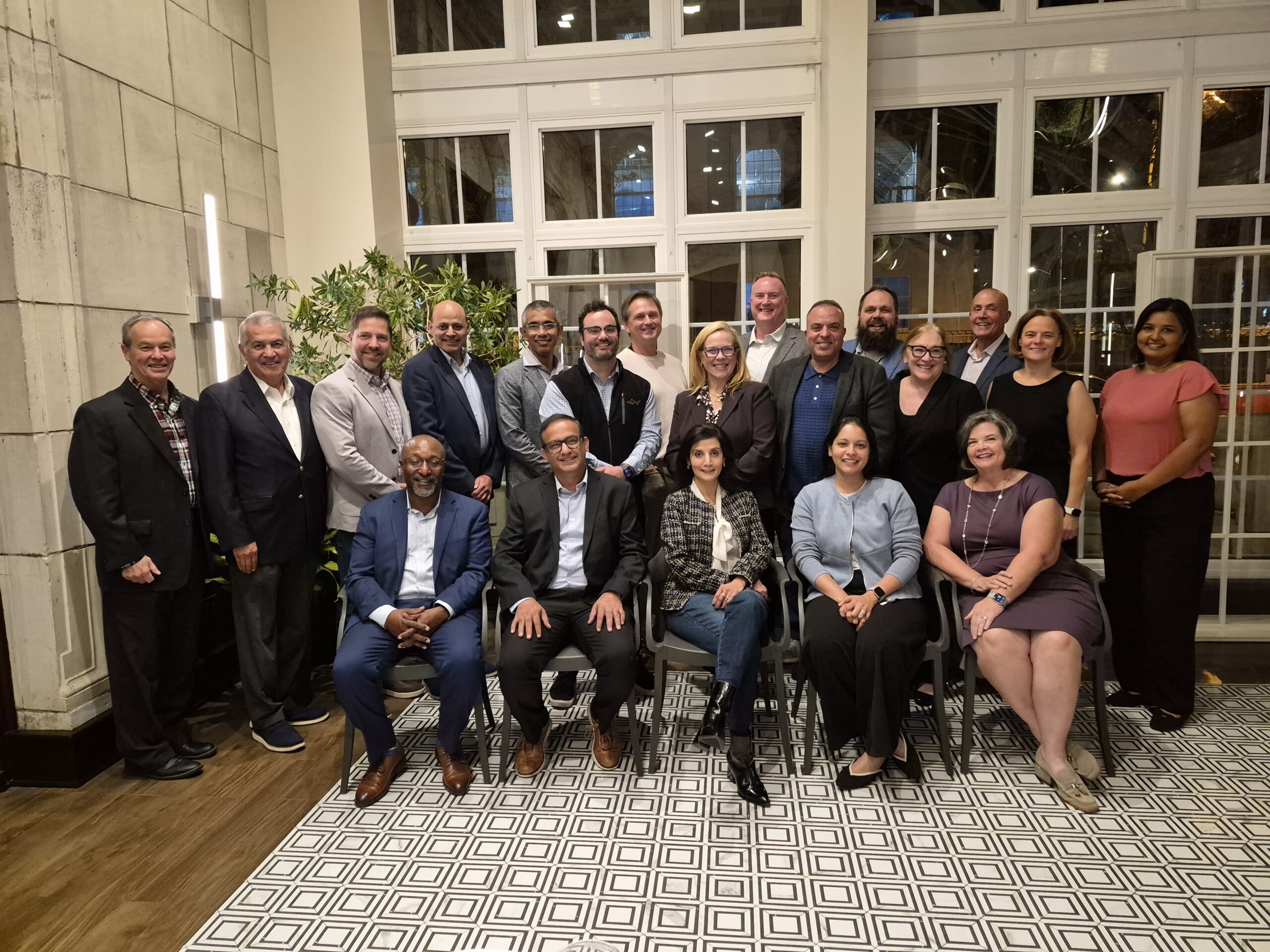
Data, AI and technology leaders gather for the CDO Magazine Milwaukee Roundtable Exchange on October 21, 2026.
An AI pilot can demonstrate that a model works. Getting the same technology into production, across business units and with measurable results, is a different test.
That distinction was central to the CDO Magazine Milwaukee Roundtable Exchange, held October 21 at Bacchus in Milwaukee. Chief Data Officers (CDOs) and fellow data, AI, cybersecurity and technology leaders gathered to compare what is helping their organizations move beyond experimentation, where initiatives are getting stuck and what needs to change as they plan for 2027.
The Roundtable Exchange was co-chaired by Sonali Mathur, Abbott Global Head, Data & Analytics, and Vignesh Shetty, Medtronic VP, AI & Product Development.
Across the discussion, leaders returned to a common challenge: AI capabilities are advancing, but the organizational foundations needed to support them aren’t always keeping pace. Data quality, governance, accountability and employee adoption all influence whether an AI investment delivers value beyond its initial pilot.
The challenge isn’t proving AI works. It’s scaling it.
For many organizations, the question has shifted from whether AI can perform a task to whether the business can support that capability at scale.
Michael Grimes, Northwestern Mutual Vice President of Data Engineering & Governance, described the challenge as one of execution as much as technology.
“Our conversation reinforced that realizing value from data and AI is as much about strong governance, trusted data, and disciplined execution as it is about the technology itself. The most valuable part of the evening was the candid exchange among leaders navigating similar challenges and learning from one another as we move from pilots toward scaled, enterprise impact.”
They examined why promising pilots struggle to become enterprise capabilities. Leaders considered the role of legacy systems, fragmented data, AI governance requirements and the difficulty of embedding AI into established business processes.
Mathur pointed to a distinction that emerged during the conversation: A successful pilot establishes that a model can work, while production tests whether the organization can support it.
That requires more than technical performance. Organizations need repeatable processes, clear ownership and a way to measure whether the technology is producing results worth the investment.

Milwaukee Roundtable Exchange attendee Michael Grimes, Northwestern Mutual Vice President of Data Engineering & Governance, shares his perspective during the executive discussion.
Trusted data is becoming the differentiator
As AI models become more widely available, data leaders are reconsidering what gives their organizations a competitive advantage.
For Sonali Mathur, Abbott Global Head, Data & Analytics, the answer begins with trusted enterprise data.
“In the era of AI, data has become the ultimate differentiator. Organizations are increasingly recognizing that AI outcomes are only as effective as the quality, context, and governance of the underlying data. As models become more commoditized, trusted, well-governed data is emerging as the true source of competitive advantage.”
Mathur also pointed to a challenge many enterprises face as they move beyond experimentation: proving a model works is only the beginning. Organizations must then determine whether their processes, governance and operating models can support that technology at scale.
She highlighted the growing role of data products in that transition. Rather than managing data solely through traditional systems and pipelines, organizations are moving toward reusable, business-aligned assets that support consumption, accountability and value creation.
Priyanka Kalra, Utility Company Strategy Advisor for Data, AI and Governance, pushed the idea of data readiness further, particularly for organizations deploying autonomous AI agents.
“Clean data is not ready data. Before an agent touches data, answer four questions: Who owns it? What does it mean? Where did it come from? When should it be used, and, more importantly, when should it not be used?”
For leaders preparing to scale agentic AI, data readiness involves more than accuracy and accessibility. It also requires clear ownership, business context and an understanding of when information should—or should not—be used.

Priyanka Kalra, Strategy Advisor for Data, AI and Governance at a utility company, contributes to the discussion on AI accountability and data readiness.
Governance must work when agents are making decisions
The growing use of AI agents raised another question: Who is responsible when an autonomous system makes a decision or takes an action?
Kalra argued that accountability needs to be established before deployment, rather than after an incident.
“Name the owner before the agent acts, not after it fails.”
She described accountability as a shared responsibility across the people using AI, the vendors providing the tools, the data teams maintaining the foundations and the business leaders responsible for outcomes.
The leaders also examined how AI is changing the relationship between governance and cybersecurity.
As agents gain access to more enterprise information and become capable of executing tasks, organizations face new questions about access controls, privacy, data loss prevention and oversight.
Mathur noted that governance is becoming more than a compliance function. When designed into the operating model, it can help organizations establish the trust needed to expand AI adoption.
That doesn’t eliminate risk. It gives leaders a clearer framework for deciding which applications are ready to scale, which require additional safeguards and where investment should be reconsidered.
AI transformation is a people challenge
Even with strong data foundations and governance, scaling AI requires employees to change how they work.
For Maribeth Achterberg, Former Boldt Group Chief Information Technology Officer, that was one of the evening’s strongest takeaways.
“AI adoption is not a technology issues. Humans are the barrier to fast adoption of AI. It’s early days when you consider how humans make wide scale change stick and we lack trust in the technology.”
Achterberg emphasized the importance of applying lessons from previous digital transformations rather than assuming AI adoption will happen simply because the tools are available.
Organizations need to build trust, prepare employees for new responsibilities and give teams practical reasons to adopt different ways of working.
She also raised the changing cybersecurity landscape. While AI can strengthen defensive capabilities, it is creating new challenges for security teams as well.
Shetty, captured the organizational challenge in a particularly direct observation:
“What I took away is that AI transformation is 10% technology and 90% psychology. The technology is getting easier; changing how organizations work is not.”
His perspective reinforced the importance of looking beyond technical implementation.
Organizations may have access to increasingly capable AI tools, but the ability to translate those capabilities into measurable business outcomes still depends on people, processes and leadership decisions.

Milwaukee Roundtable Exchange co-chairs Sonali Mathur, Abbott Global Head, Data & Analytics, and Vignesh Shetty, Medtronic VP, AI & Product Development, engage with fellow executives.
Looking toward 2027: From experimentation to measurable value
As the conversation turned toward investment priorities for 2027, participants considered how organizations should decide which AI initiatives deserve additional funding, which need to be redesigned and which should be stopped.
The questions were practical: Who owns the outcome? What business process is improving? How will success be measured? And can the organization support the technology beyond its initial implementation?
Mathur pointed to data products, stronger governance and business-aligned operating models as important considerations for the next stage of enterprise AI.
Shetty emphasized the need to turn AI capabilities into actionable evidence that organizations can use to make decisions.
Neither perspective treats scaling as simply deploying more technology. Both point toward building the conditions that allow AI investments to produce repeatable business value.
That was also where the value of the Milwaukee community came through.
The executives brought different experiences and priorities to the table, but many were working through similar questions about AI adoption, governance and cybersecurity. Hearing how peers approached those challenges gave participants an opportunity to compare ideas beyond their own organizations.
Milan Gavran, Fortinet Account Manager, appreciated the opportunity to participate in those conversations without the pressure of a traditional sales setting.
“The Milwaukee Roundtable Exchange dinner format provided an environment for honest, constructive communication. The event allowed me as a cybersecurity provider to participate in no-pressure business discussions about the many factors our customers must consider before adopting AI beyond data protection.”
The conversations reflected a shift in enterprise AI priorities. The question is no longer just whether a model can deliver an impressive result.
It’s whether the organization can make that result reliable, accountable and valuable at scale.

Sonali Mathur, Abbott Global Head, Data & Analytics and Milwaukee Roundtable Exchange co-chair, joins fellow data and AI executives for a candid discussion on scaling AI, strengthening data foundations and driving enterprise value.
Milwaukee Roundtable Exchange Attendees:
- Maribeth Achterberg*, Former Boldt Group Chief Information Technology Officer
- Adel Bekhiet, Northwestern Mutual Sr. Director, Infrastructure & Cloud Services
- Kristen Benbazza, Molson Coors Beverage Company VP, Data, Analytics & AI
- Mark Blau, Delta Defense Director, Information Security & Technology Operations
- David Cagigal, Former State of Wisconsin CIO
- Dan D’Amore, Medical Therapeutics Chief AI Officer
- Michael Grimes*, Northwestern Mutual Vice President of Data Engineering & Governance
- Michelle Hobbins, Carthage College Associate VP, Information Technology
- Priyanka Kalra, Utility Company Strategy Advisor for Data, AI and Governance
- Achint Lala, GE HealthCare Director, AI & Digital Software
- Sonali Mathur*, Abbott Global Head, Data & Analytics
- Punit Menon, Medtronic VP, Global Logistics, Distribution & Trade
- Vignesh Shetty*, Medtronic VP, AI & Product Development
- Shruti Thaker, Molson Coors Beverage Company Enterprise Architect
- Michael Edmond, 4Minds Enterprise Account Executive
- Ed Porter, 4Minds VP, Sales
- Jane Johnson, Alation Sr. Enterprise Account Executive
- Jeff Looysen, Alation Enterprise Account Executive
- Milan Gavran, Fortinet Account Manager
- Justin Valentine, Fortinet SE Director
- Marisa Harmon, CDO Magazine Account Director
- Camille Prado, CDO Magazine Global Editor
*Maribeth Achterberg, Michael Grimes, Sonali Mathur, and Vignesh Shetty are CDO Magazine Global Board members.
CDO Magazine thanks 4Minds, Alation and Fortinet for supporting the Milwaukee Roundtable Exchange and helping bring together the region’s data, AI and technology leadership community.
Milwaukee’s Data & AI Leaders Are Talking. Are You Part of the Conversation?
The challenges facing data and AI leaders aren’t unique to any one organization. Across Milwaukee, executives are comparing notes on what’s working, what’s not, and the decisions shaping their organizations’ futures.
These are the conversations worth being part of. Join CDO Magazine’s Milwaukee data and AI leadership community to exchange ideas, build relationships, and learn directly from peers who understand your challenges.


 Elevate Your Personal Brand


