
2026 CDO Report: Meet the Modern Data Team New survey of VP & C-level data and AI leaders confirms what’s stalling AI transformation.
Webinar | The 2026 Data & AI Compensation Benchmark: What Executive Talent Is Really Worth From compensation benchmarks to organizational influence, uncover what the market reveals about the evolving data and AI executive role.
What Is a Chief Data Officer in 2026? Many people working within the data industry are saying the same thing: the role of the Chief Data Officer (CDO) has changed – but how? CDO Magazine began an expert survey to find out. We recent...
Community
Charlotte Data and AI Leaders Examine What It Takes to Scale AI Across the Enterprise
Senior data, AI and technology leaders gathered in Charlotte for a candid discussion on AI operating models, governance, enterprise adoption and the path from experimentation to production.

Written by: Camille Prado, Global Editor, CDO Magazine
Updated 11:18 AM EDT, September 28, 2026
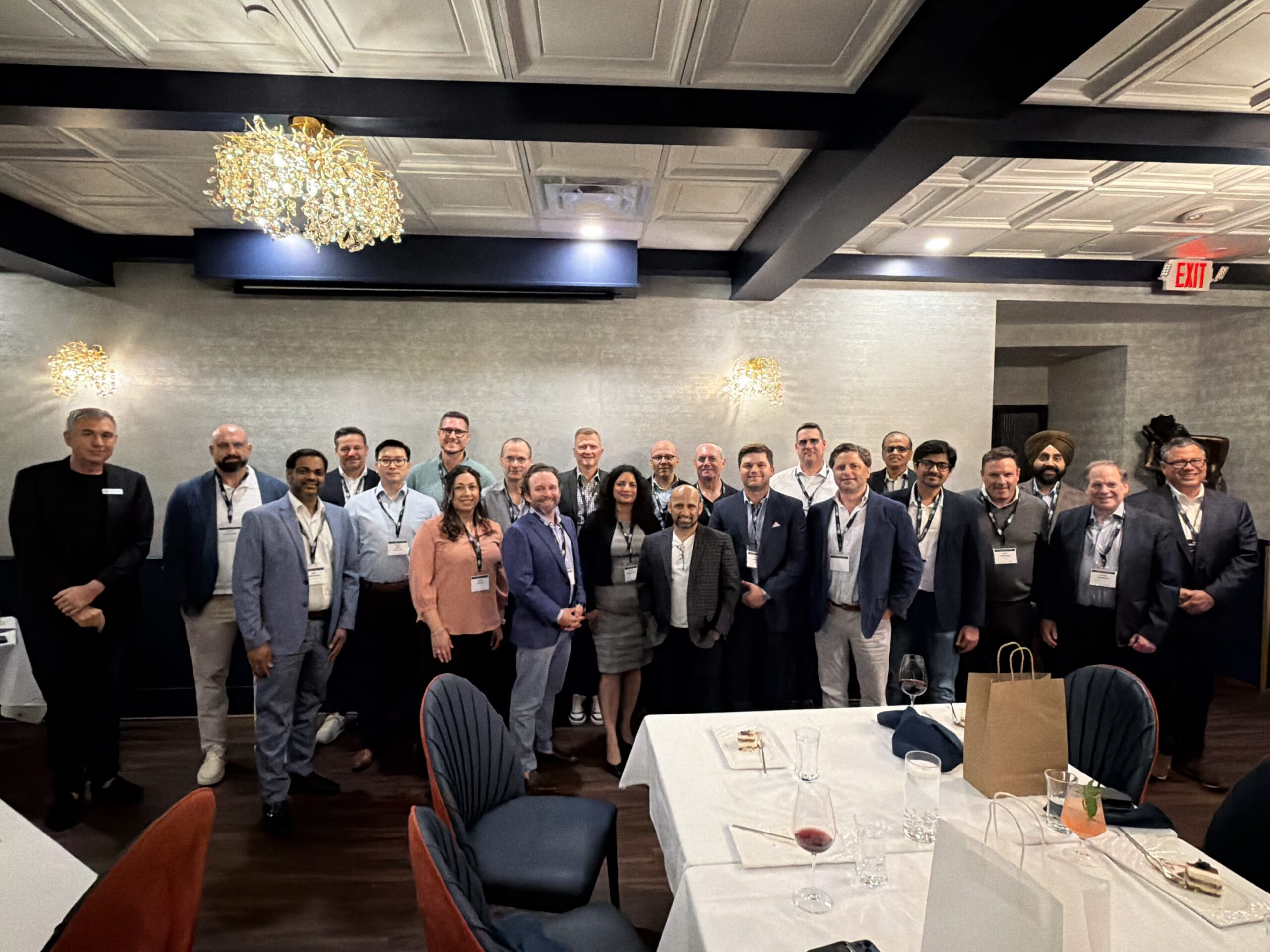
Senior data, AI and technology leaders gathered in Charlotte on September 24 for a CDO Magazine Executive Boardroom Dinner to exchange perspectives on enterprise AI enablement, operating models, governance and the path from experimentation to production.
CHARLOTTE, N.C. — September 24, 2026 — As enterprises move beyond AI experimentation, the challenge facing data and AI leaders is becoming increasingly operational: How do organizations build the structure, governance and business alignment required to scale AI responsibly?
That question brought senior data, AI and technology executives together in Charlotte for a CDO Magazine Executive Boardroom Dinner, sponsored by AHEAD. The evening created an intimate setting for leaders across industries to compare approaches to AI enablement and discuss what is working — and what continues to stand in the way.
The conversation reflected a shift taking place across the enterprise. AI is no longer solely a technology initiative. Scaling it requires decisions about ownership, operating models, data foundations, governance, talent, architecture and business engagement — often involving stakeholders across data and AI teams, cybersecurity, legal, risk and individual business units.
That expanding mandate is also reshaping expectations for the Chief Data Officer (CDO) and other enterprise data leaders as data becomes increasingly intertwined with AI systems and business operations.
From AI ambition to an enterprise operating model
A central theme of the evening was how organizations are structuring themselves to enable AI across the enterprise.
The discussion explored what should be centralized, what belongs within individual business units and how data and AI organizations can work effectively with other enterprise functions. Participants compared approaches to defining responsibilities across teams while maintaining enough coordination to move AI initiatives from ideas and pilots into production.
For David Washo, AHEAD Managing Partner, Consulting Services, the conversation highlighted the importance of establishing clear ownership as organizations scale AI.
“We had a great conversation around operating models, decision rights and accountability — ultimately, who has the authority to make decisions across people, process and technology.”
The conversation also examined the role data and AI leaders play in enabling the broader organization. Depending on the enterprise, that can encompass strategy, platforms, governance, architecture, data readiness, use-case prioritization and adoption — while other responsibilities remain distributed among technology, risk, security, legal and business teams.
The result is an operating model that increasingly depends on collaboration rather than a single function owning AI end to end.

CDO Magazine Founder & Publisher Steve Wanamaker addresses senior data, AI and technology leaders during the September 24 Executive Boardroom Dinner in Charlotte.
Where AI gets stuck
Participants also tackled one of the most consequential questions facing enterprises today: What is actually preventing AI from scaling?
The potential bottlenecks are numerous. Data quality and accessibility can limit what models can reliably do. Governance and risk requirements can complicate deployment. Talent and organizational readiness can slow adoption. Business teams may struggle to identify the right use cases, while technology teams face an AI tooling landscape that continues to change rapidly.
For Hiren Rokadia, TTX Company Director AI & Data-Driven Strategy, the discussion reflected how the enterprise AI conversation itself is evolving.
“The AI conversation is shifting from ‘What can we do?’ to ‘Where can we create meaningful business value?’ As AI scales, strong data foundations and practical governance and standards become just as important as the technology itself.”
That shift makes prioritization increasingly important. The challenge is not simply finding places where AI can be used, but determining where it can create meaningful business value and where the organization is sufficiently prepared to support it.
Rokadia also pointed to the organizational challenge behind that work:
“AI moves fast, but organizations still have to bring people, process, data, and technology together to make it work.”
For Sai Seethala, Terex Corporation Global Head – Data, Governance & AI, one of the evening’s biggest takeaways was how differently organizations are approaching many of those same challenges.
“My biggest takeaway was the diversity of perspectives across industries, particularly regarding AI governance and the transition from pilots to measurable ROI. My favorite part of the discussion was hearing how different organizations are tackling many of the same AI challenges with distinct approaches shaped by their industries, operating models and levels of AI maturity. AI enablement is table stakes now.”
Together, those perspectives captured an important thread running through the evening: scaling AI is becoming less about proving what the technology can do and more about creating the data foundations, governance, operating models and organizational alignment required to turn that potential into measurable business value.
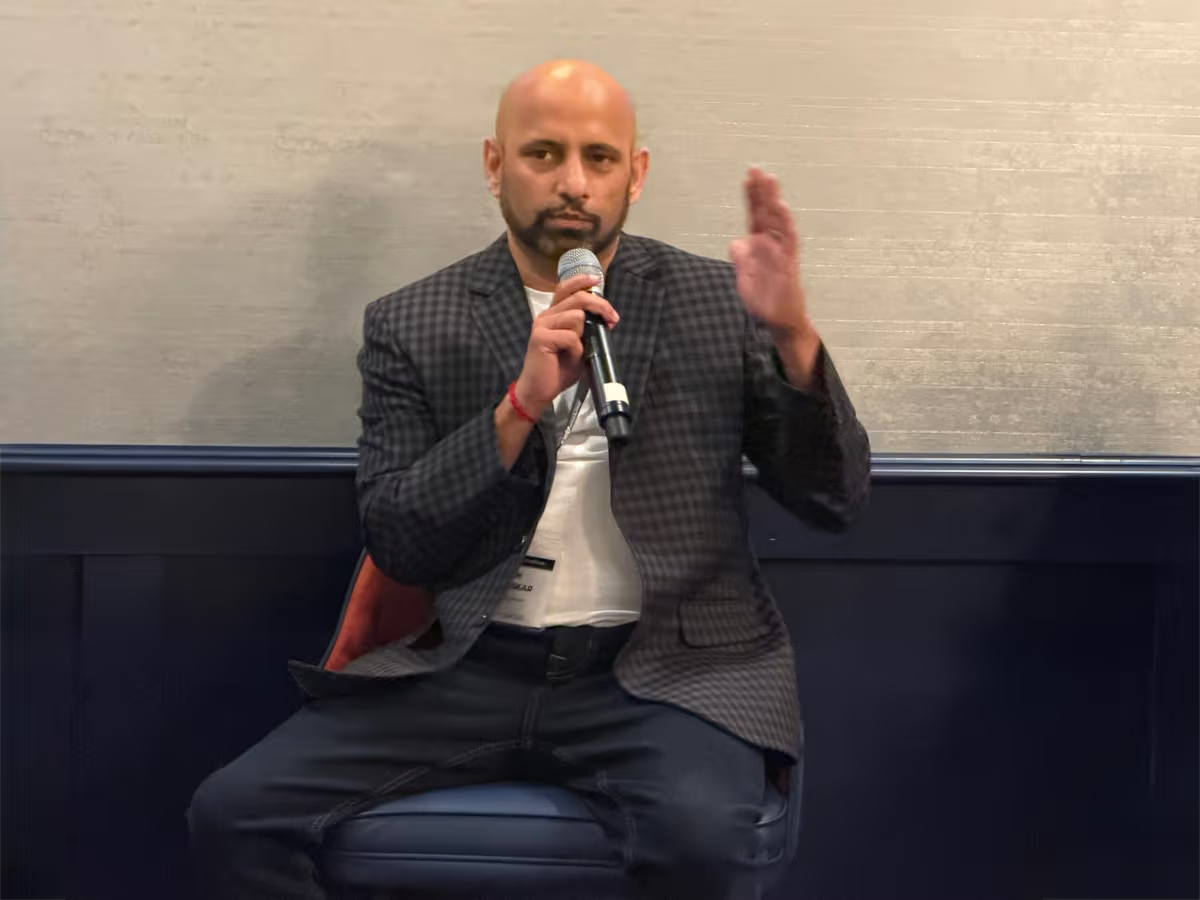
Ash Kaduskar, First Citizens Bank Head of Artificial Intelligence, shares his perspective during the CDO Magazine Executive Boardroom Dinner in Charlotte.
Connecting data governance and AI governance
Governance emerged as another important part of the discussion, particularly the relationship between established data governance programs and newer AI governance structures.
As AI becomes embedded in enterprise workflows and decision-making, the two disciplines are increasingly connected. Reliable AI depends on reliable, well-understood data, while AI introduces additional questions around model behavior, accountability, risk and ongoing oversight.
The discussion considered how organizations can connect those responsibilities without creating parallel governance structures that slow execution or leave gaps in accountability.
It is a challenge facing data and AI leaders well beyond the room. Effective AI governance increasingly depends on clear ownership across data, models, technology, risk and the business — and on governance becoming part of how AI is operationalized rather than a checkpoint added at the end.
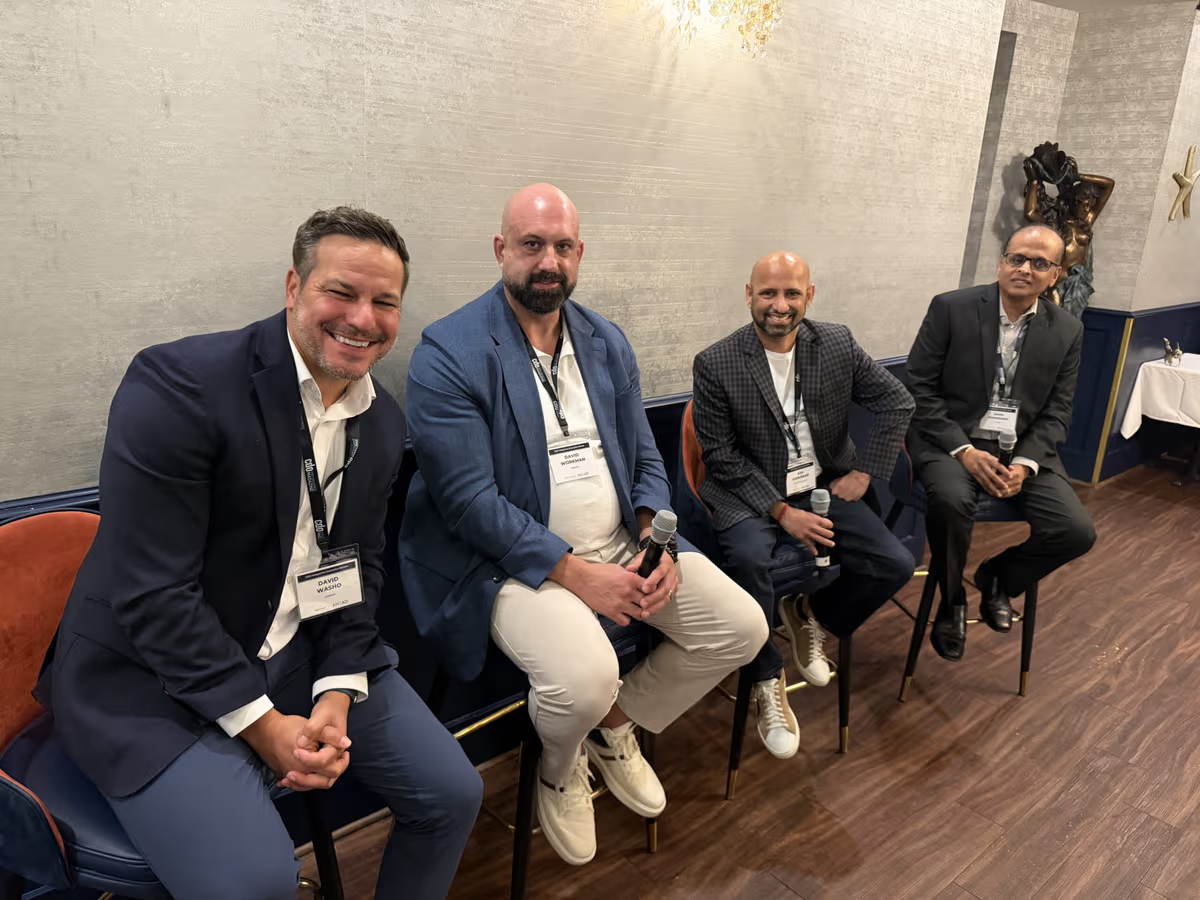
David Washo, AHEAD Managing Partner, Consulting Services; David Workman, AHEAD Data & AI Practice Lead; Ash Kaduskar, First Citizens Bank Head of Artificial Intelligence; and Sana Ramasamy, Barings Chief Data Officer, lead a discussion on enterprise AI enablement, governance and scaling AI into production.
Choosing tools without chasing the market
The rapidly changing AI technology landscape added another dimension to the conversation.
Rather than focusing on individual products, participants discussed how enterprises evaluate emerging tools and capabilities, determine what belongs in the technology stack and establish the architectural foundations needed to support AI at scale.
For enterprise leaders, the pace of change creates a balancing act. Organizations need enough flexibility to take advantage of new capabilities without continually rebuilding their environments around the newest technology. Decisions also have to account for security, governance, interoperability, enterprise data and the practical requirements of moving solutions into production.
Those considerations make architecture and tooling decisions increasingly inseparable from the broader AI operating model.
AI adoption is ultimately an organizational challenge
Technology and governance were only part of the equation. Participants also discussed AI literacy, upskilling, change management and the work required to turn available AI capabilities into actual enterprise adoption.
For Ash Kaduskar, First Citizens Bank Head of Artificial Intelligence, AI adoption is increasingly about something bigger than deploying another enterprise tool.
“AI democratization is becoming a critical part of enterprise AI strategy. We don’t ask for the ROI of email or Excel because they are fundamental to how we work. AI will increasingly be viewed the same way—not simply as a tool, but as a new way of working.”
That shift has implications for the entire organization. Employees need to understand not only how to use AI tools, but where they are appropriate, how to use them responsibly and how AI changes existing ways of working. Business leaders, meanwhile, need enough understanding to identify valuable opportunities and participate meaningfully in decisions about priorities, risk and implementation.
For data and AI leaders, that means enablement increasingly extends beyond building technology. It includes creating the conditions in which people across the enterprise can use it effectively.
Special thanks to AHEAD for making the event a success.
Data & AI leaders attending the CDO Magazine Charlotte Executive Boardroom Dinner included:
- Gurpreet Atwal, Truist Chief Data Officer
- Alan Calvitti, Bank of America VP Data Engineer
- Andres Castaneda, Honeywell Aerospace Director AI Strategy
- Michael Donham, Octapharma Plasma, Inc. Sr. Director, IT | Group Sr. Director, CCoE
- Priya Govindarajan, Truist Sr. Vice President, Enterprise Data & Analytics
- Saira Haque, Pfizer Lead, Advanced Medical Solutions Group
- Eran Hauser, Bank of America VP, Cyber Security Technology – GIS Innovation
- Ryan Jacobs, Marathon Health SVP, Strategy & Partnerships
- Ash Kaduskar, First Citizens Bank Head of Artificial Intelligence
- Daniel Kaskinen, HANDLE Global VP of Data & AI Architecture
- Daniel Reaume, Honeywell Technologies Vice President, Commercial Data & Analytics
- Hiren Rokadia, TTX Company Director AI & Data-Driven Strategy
- Eric Rui, GM Financial VP, Global Enterprise Data Architecture
- Sana Ramasamy, Barings Chief Data Officer
- Sai Seethala, Terex Corporation Global Head – Data, Governance & AI
- Raghav Kooram Tirumala, TIAA AI Experience & Governance Leader
- Ellis Foster, AHEAD Client Engineer
- Wes Furchner, AHEAD Client Director
- Todd Jones, AHEAD Client Director
- Cam Snow, AHEAD Intelligent Operations Specialist
- Matt Steckel, AHEAD Managing Director – Mid Atlantic
- David Washo, AHEAD Managing Partner, Consulting Services
- David Workman, AHEAD Data & AI Practice Lead
- Anthony Losanno, CDO Magazine Managing Director
- Steve Wanamaker, CDO Magazine Founder & Publisher


 Elevate Your Personal Brand