
2026 CDO Report: Meet the Modern Data Team New survey of VP & C-level data and AI leaders confirms what’s stalling AI transformation.
Webinar | The 2026 Data & AI Compensation Benchmark: What Executive Talent Is Really Worth From compensation benchmarks to organizational influence, uncover what the market reveals about the evolving data and AI executive role.
What Is a Chief Data Officer in 2026? Many people working within the data industry are saying the same thing: the role of the Chief Data Officer (CDO) has changed – but how? CDO Magazine began an expert survey to find out. We recent...
Community
Beyond the AI Pilot: San Francisco Leaders Talk Automation, Agents and Trust
Data, AI and technology leaders gathered in San Francisco to compare experiences with workflow automation, agentic AI and the challenge of building trust as AI takes on more complex work.

Written by: Camille Prado, Global Editor, CDO Magazine
Updated 12:11 PM EDT, October 1, 2026
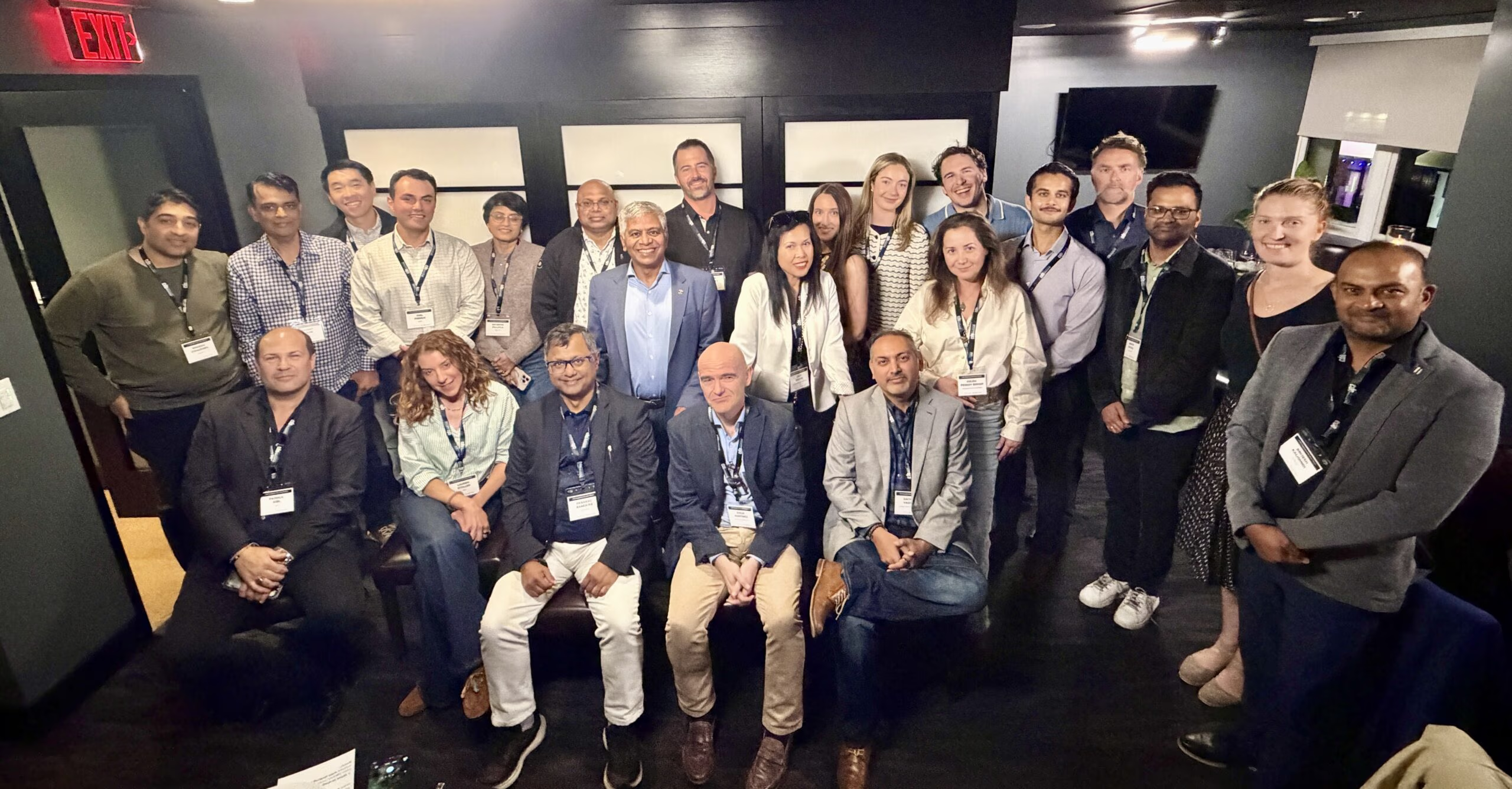
Data, AI and technology leaders gather for the CDO Magazine San Francisco Executive Boardroom Dinner on September 29, 2026.
As AI moves deeper into everyday business operations, leaders are confronting practical questions about what to automate, where human judgment still matters and how much autonomy organizations are prepared to give AI systems.
Those questions were at the center of CDO Magazine’s September 29 Executive Boardroom Dinner in San Francisco, where leaders shared experiences with workflow automation, agentic systems and the challenge of building trust as AI takes on more complex work.
The discussion focused on three questions: Where are organizations seeing the biggest wins and challenges with workflow automation? How are leaders approaching trust and transparency as agentic systems scale? And how can AI initiatives remain connected to business priorities as those priorities change?
Before AI Can Automate the Work, Organizations Have to Understand It
One of the recurring themes was that successful automation starts well before an AI system is introduced. Organizations first need a clear understanding of how work actually gets done, including the processes, decisions and dependencies that may not be captured in formal documentation.
Shadaab Kanwal, Yale University Executive Director Research Informatics | AI and Innovation, put it this way:
“What cannot be documented cannot be automated. As we move toward AI-native innovation, physical AI, and autonomous intelligence, organizations must first document, map, and contextualize how work actually happens. Only then can we determine what should remain human-led, what can be delegated to specialized AI agents, and how those agents can be orchestrated by a supervisory agent to deliver an end-to-end outcome.”
That distinction shaped much of the discussion. Leaders considered how organizations can identify the right work for automation while preserving human judgment where context, accountability or experience still matter.
The conversation also touched on a practical challenge familiar to many enterprises: the way a process is documented does not always reflect the way people actually perform the work. That gap matters when organizations begin asking AI systems to participate in or automate those processes.
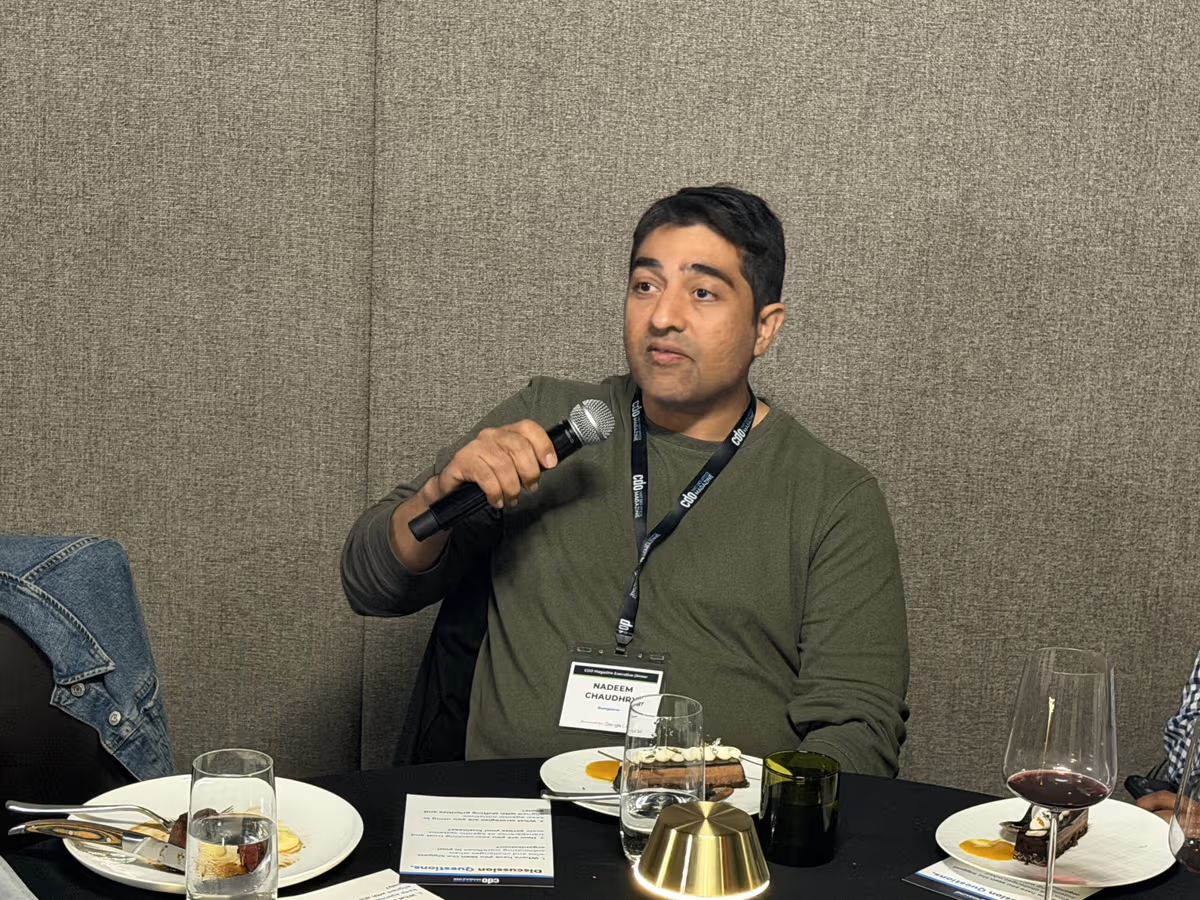
Nadeem Chaudhry, Bungalow Head of Applied AI, contributes to the discussion during the CDO Magazine San Francisco Executive Boardroom Dinner.
Trusting AI to Act, Not Just Answer
As the conversation moved from traditional automation to agentic AI, trust emerged as a central issue.
The group discussed how expectations change when an AI system is no longer simply generating an answer or recommendation, but is being given greater ability to act. Accuracy remains important, but leaders also need visibility into how systems operate and confidence that their actions remain consistent with business goals and acceptable levels of risk.
Ozlem Peskov Bishop, Renaissance Park Corporation CDO & Director of Research, reflected on that challenge following the dinner:
“The dinner underscored that trust in automation and agentic AI cannot stop at accuracy, transparency, and factuality. It has to be defined, built, and sustained by weaving those qualities together with intentionality, usefulness, and meaning—so the systems we ship actually make sense, deliver real value, and manage risk. That is especially true of the agent networks we are building: they need a durable trust layer that surfaces hidden components and counters systematic bias.”
The discussion made clear that accuracy alone is not enough. Leaders also have to understand how AI systems reach decisions, what they act on and whether those actions remain aligned with the organization.
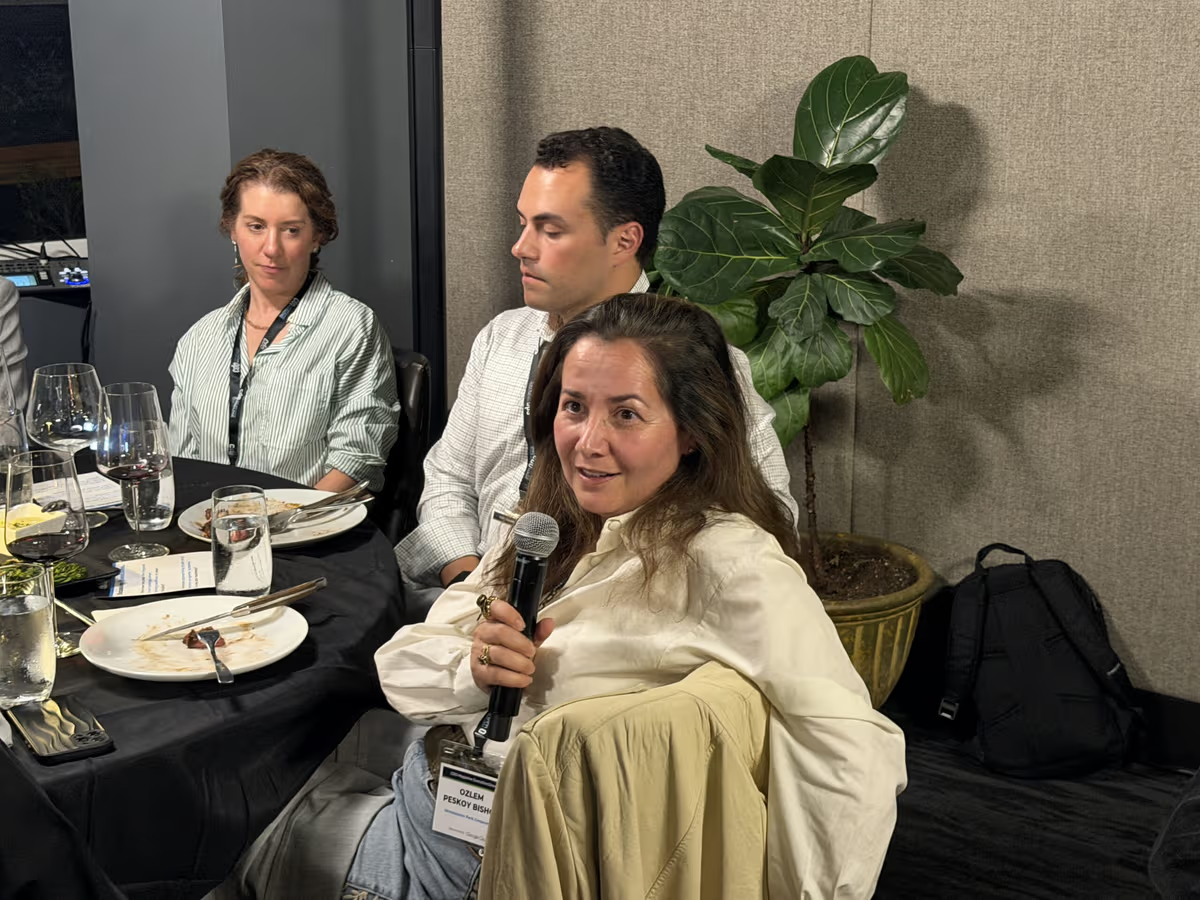
Ozlem Peskoy Bishop, Renaissance Park Corporation CDO & Director of Research, shares her perspective during the discussion.
Keeping AI Focused on the Business
The evening also explored how organizations can keep agentic AI initiatives connected to business priorities as both the technology and those priorities evolve.
Participants discussed the importance of starting with the business problem rather than the technology itself. The availability of increasingly capable AI tools can create pressure to find places to use them, but the more useful question is whether an initiative solves a meaningful problem and fits the way the organization operates.
The group also considered what happens after an AI initiative is underway. Business priorities change. New capabilities become available. Risk considerations evolve. What made sense when a project began may need to be revisited as it moves closer to production or takes on greater responsibility.
That puts a premium on continued involvement from both technology teams and the business rather than treating alignment as something established only at the beginning of a project.
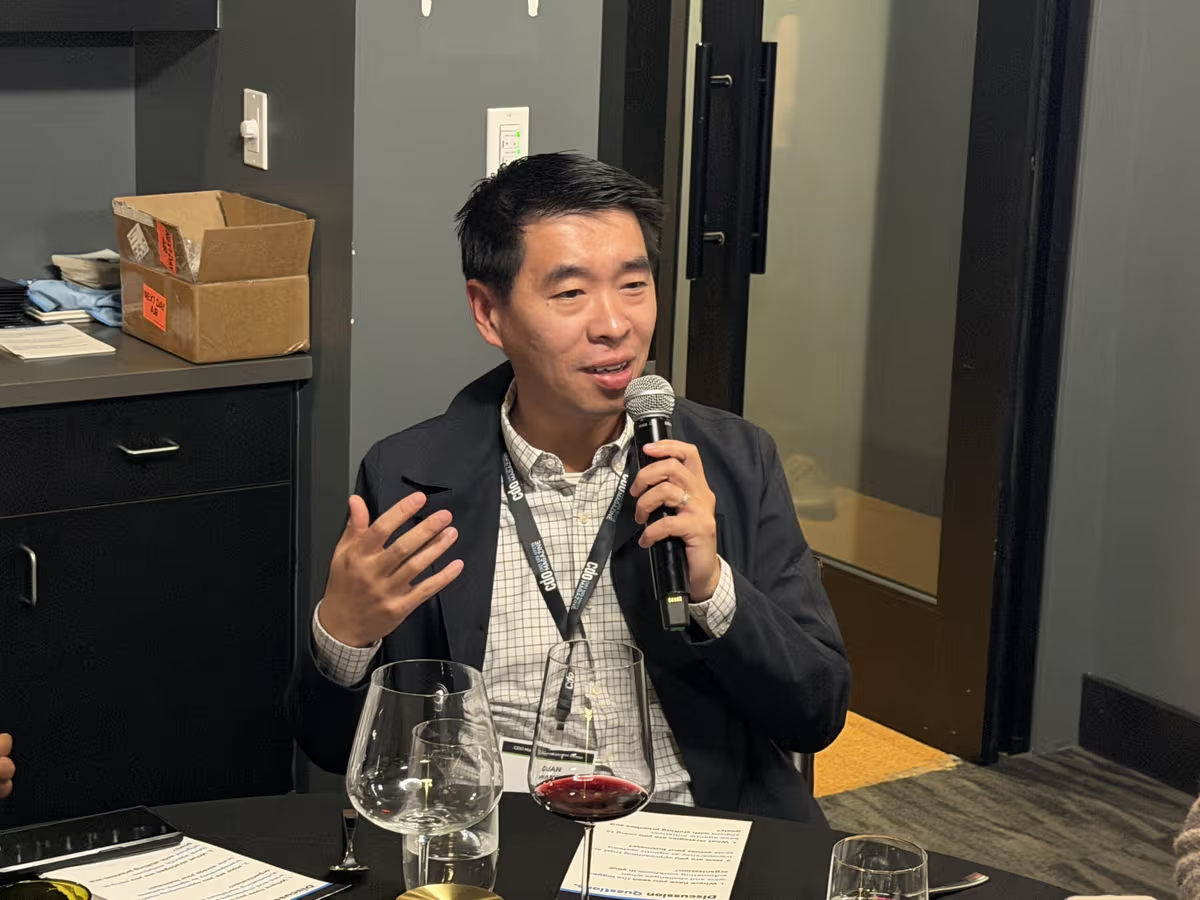
Guan Wang, Diversis Capital Head of AI and Data, shares his perspective on workflow automation and agentic AI during the CDO Magazine San Francisco Executive Boardroom Dinner.
The conversation extended beyond technology and operating models to the longer-term consequences of AI adoption.
Bishop said one of the things that stayed with her was a community already thinking about both the opportunities and the potential pitfalls of AI, including how its adoption could affect people entering the workforce.
She specifically pointed to the need to create pathways for under-resourced youth and recent graduates who may be screened out by AI-driven processes because they lack conventional experience.
It was a reminder that decisions about how AI systems are designed and deployed can have consequences well beyond the immediate workflow being automated.
A Community Comparing Notes on What Comes Next
Throughout the evening, the discussion returned to the value of comparing experiences across organizations.
There was no suggestion that every company should follow the same path. Different businesses have different processes, risk tolerances, technology environments and priorities. But the questions leaders are confronting increasingly overlap: where automation creates value, where human judgment remains essential, how trust is established and what changes when AI moves from assisting people to acting on their behalf.
That exchange of perspectives is at the heart of CDO Magazine’s Executive Boardroom Dinner series, creating space for data, AI and technology leaders to talk candidly about what they are seeing inside their organizations and learn from peers working through many of the same issues.
Data, AI and Technology Leaders Who Joined the San Francisco Conversation:
- Debarag Banerjee, L&T Finance Chief AI and Data Officer
- Nadeem Chaudhry, Bungalow Head of Applied AI
- Brian Dempsey, Robert Half VP – Managed Technology Solutions
- Patrick Eibl, OVAL Director, Investments and Corporate Development
- Joel French, Google Enterprise Data + AI Platform GTM
- Ankit Goyal, LinkedIn Principal Staff Software Engineer
- Brijesh Kalidindi, Stellarus Vice President Data Engineering
- Shadaab Kanwal, Yale University Executive Director Research Informatics | AI and Innovation
- Jayant Kolhe, Stripe Head of Privacy & Data Protection (Engineering)
- Josue Martinez, University of California Business Analytics Practicum Director | Lecturer, Business Analytics
- Bhavani Palukuri, Patelco Credit Union Vice President Enterprise Architecture & AI Innovation
- Ozlem Peskoy Bishop, Renaissance Park Corporation CDO & Director of Research
- Jayanthi Pillutla, Stitch Fix SVP Engineering – Data, AI/ML, Business Systems
- Alyssa Simpson Rochwerger, Grounded Health CEO & Co-Founder
- Jean-Paul Saliou, Augura CTO
- Lauren Stoller, Brigit VP Data & Analytics
- Sachin Vaidya, Heritage Bank of Commerce EVP, CIO
- Guan Wang, Diversis Capital Head of AI and Data
- Lilly Zoltak, J.P Morgan Wealth Management Private Client Advisor & VP of Investments
- Chris Bocchicchio, Google Data & AI Specialist – Gaming
- Marina Brassington, Google Data + AI Sales Specialist – AI Native and Strategic Accounts
- Taige Eoff, Google Cloud GTM Data Practice Lead
- Akshat Mathur, Google Enterprise Data Analytics Sales
- Cat Spurrell, Google Data Cloud Strategic Engagement Lead
- Anthony Losanno, CDO Magazine Managing Director
A special thank you to the Google Cloud team for partnering with CDO Magazine to bring the San Francisco data and AI community together for the evening.


 Elevate Your Personal Brand