
What Is a Chief Data Officer in 2026? Many people working within the data industry are saying the same thing: the role of the Chief Data Officer (CDO) has changed – but how? CDO Magazine began an expert survey to find out. We recent...
Generative + Agentic AI: Moving From Experimentation to Enterprise Scale Generative and agentic AI are making their way into enterprise production, bringing new questions for Chief Data Officers (CDOs) and other data and AI leaders responsible for making these technologies...
Webinar | The Ontology Advantage: Scaling AI Across the Business Join TextQL and CDO Magazine to explore how a governed ontology can accelerate AI transformation across your organization.
Community
Beyond Smarter AI: Chicago Executives Explore the Human Judgment That Still Matters
At CDO Magazine’s Chicago Executive Boardroom Dinner, data, AI, and technology leaders unpacked the importance of business context, the limits of automation, and why human creativity and judgment remain essential as AI capabilities advance.

Written by: Camille Prado, Global Editor, CDO Magazine
Updated 1:26 PM EST, November 16, 2026
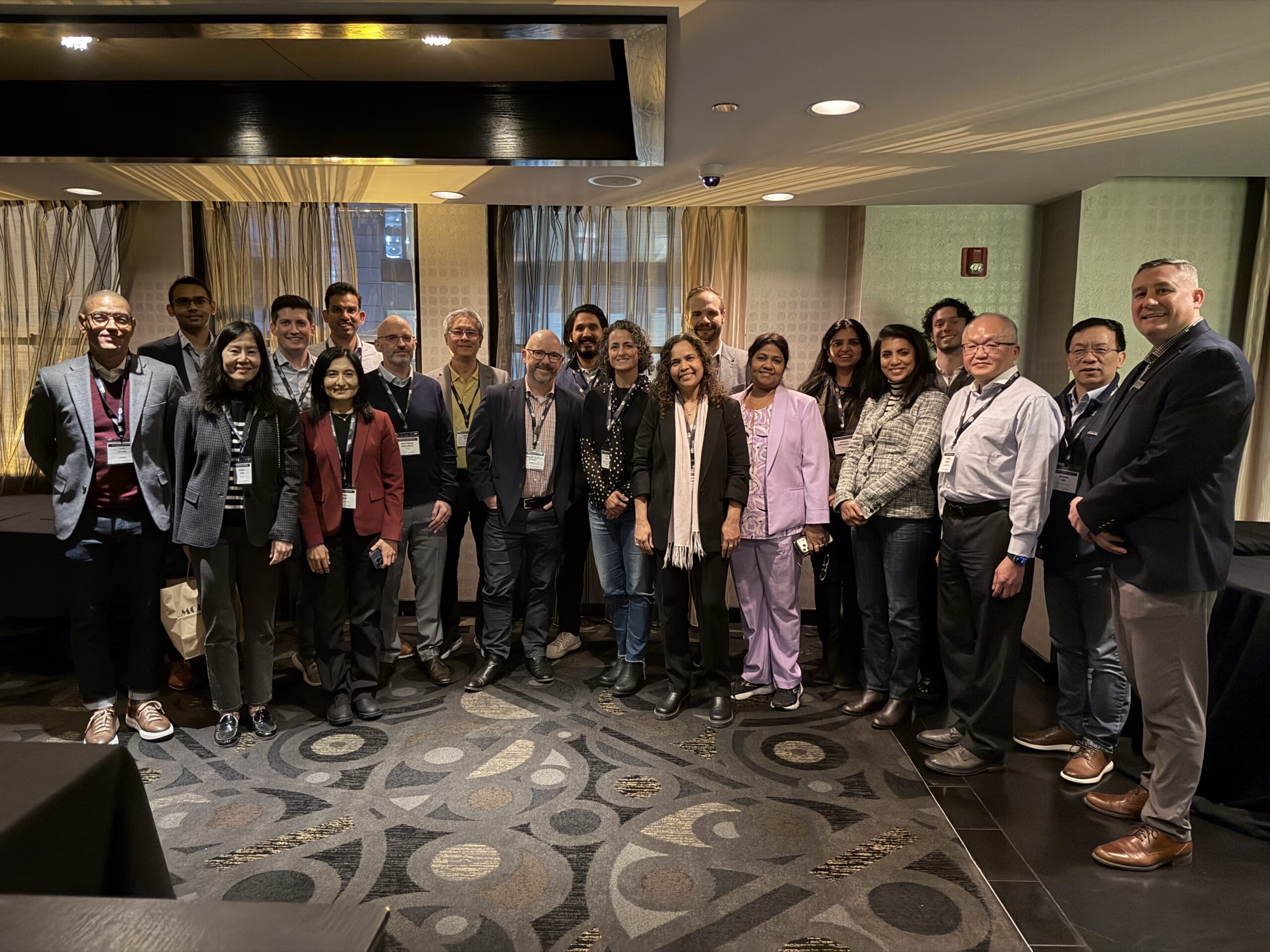
Data, AI, and technology leaders gather for CDO Magazine’s Chicago Executive Boardroom Dinner on November 12.
AI can help people work faster, access information more easily, and perform tasks that once required specialized expertise. But if those capabilities become widely available, what will distinguish the people and organizations that create something genuinely new?
That question emerged from the perspectives shared at CDO Magazine’s Chicago Executive Boardroom Dinner on November 12 at Morton’s The Steakhouse.
The event brought together executives from financial services, healthcare, technology, consumer insights, and other industries for a discussion that moved between the technical requirements of enterprise AI and the human qualities that technology cannot easily replicate.
Business context, semantic layers, knowledge graphs, and organizational intelligence were part of the exchange. So were creativity, professional experiences, and the personal decisions leaders face as AI becomes more deeply embedded in their work and lives.
When AI Needs More Than Data
One of the central questions guiding the discussion was straightforward: What does AI need to know about a business to produce useful outcomes?
The answer becomes more complicated when organizations consider the information that rarely appears in a single dataset.
Business processes, relationships between systems, institutional knowledge, operational dependencies, and changing priorities all influence how decisions are made.
The discussion, moderated by Matthew Halliday, 4Minds Chief Product Officer, invited executives to consider which forms of knowledge and context matter most when applying AI to internal operations.
It also raised questions about what happens when that information is incomplete, outdated, or difficult for AI systems to access.
These approaches also have implications for AI governance, particularly when organizations need to establish how business knowledge is structured, maintained, and made accessible to AI systems.
But the larger question extended beyond how information is structured.
Could organizations develop a deeper layer of contextual intelligence that helps AI interpret not only what the data says, but what it means within the business?
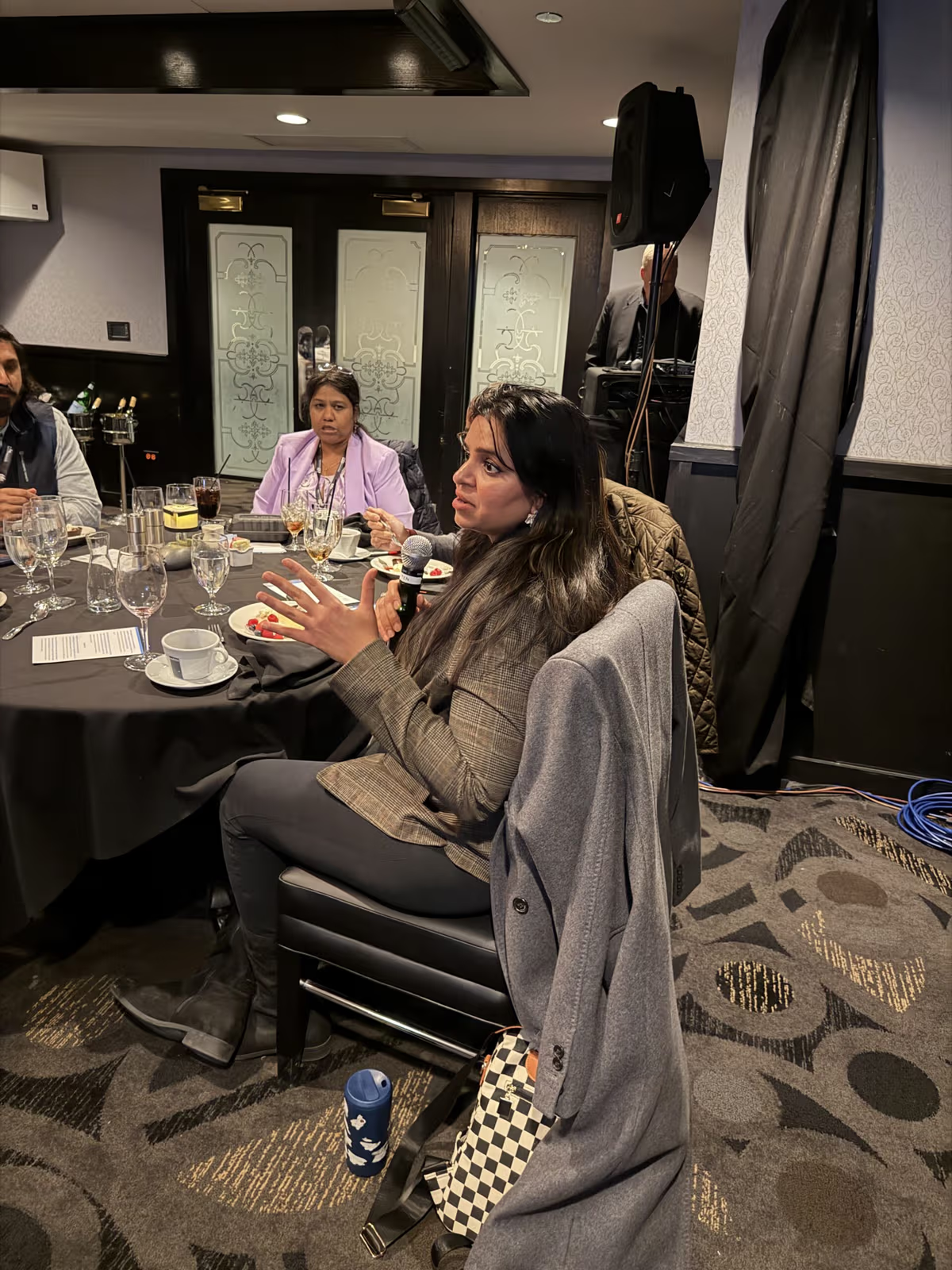
Anusha Dwivedula, Morningstar Director of Product Management, Analytics, contributes to the discussion on business context and enterprise AI during CDO Magazine’s Chicago Executive Boardroom Dinner.
Raising the Baseline Without Losing What Makes Us Different
For Anil Gutlapalli, Northern Trust Corporation VP, Enterprise Risk Data & Analytics, the discussion highlighted an important distinction between improving performance and creating something original.
Gutlapalli shared:
“AI can raise the baseline, but people still push the boundaries. AI can help all of us get better, faster. But it still takes human creativity, resilience, judgment, and a little taste to create something truly new and different.
Context really matters. We talked about semantic layers, ontologies, and knowledge graphs—and whether what we are really building is a ‘wisdom layer’ that helps AI better understand context.
The human stories were the best part. Beyond all the AI talk, we shared where we are in our professional and personal journeys. And, as you might expect from this group, a little quantum computing found its way into the conversation too.”
His reflection captures two complementary dimensions of the discussion.
The first concerns what organizations need to make AI more effective: richer context, connected knowledge, and a better understanding of how their businesses operate.
The second concerns what people contribute when AI makes routine capabilities more accessible.
As technology raises the baseline of what individuals and teams can accomplish, creativity, judgment, and the ability to recognize opportunities become increasingly important differentiators.
The idea of a “wisdom layer” offers an interesting way to connect those questions.
It suggests that the challenge is not simply providing AI with more information, but helping it interpret information within the relationships, priorities, and circumstances that give it meaning.
Beyond Productivity: What Should AI Help Organizations Accomplish?
The discussion also invited executives to look beyond familiar AI applications such as document creation and meeting summaries.
If AI could genuinely understand an organization’s unique knowledge, processes, and operating environment, what more consequential business problems could it help solve?
That question shifts attention from automating individual activities to elevating the decision-making and outcomes that matter across an enterprise.
It also raises practical challenges.
Maintaining that context also raises questions about the relationship between AI governance and data governance, especially as organizations determine who is responsible for the accuracy, accessibility, and ongoing management of the information AI relies on.
The executives considered the importance of keeping organizational knowledge accurate, relevant, and accessible as AI initiatives develop especially as organizations want AI to support complex business decisions rather than simply accelerate existing tasks.
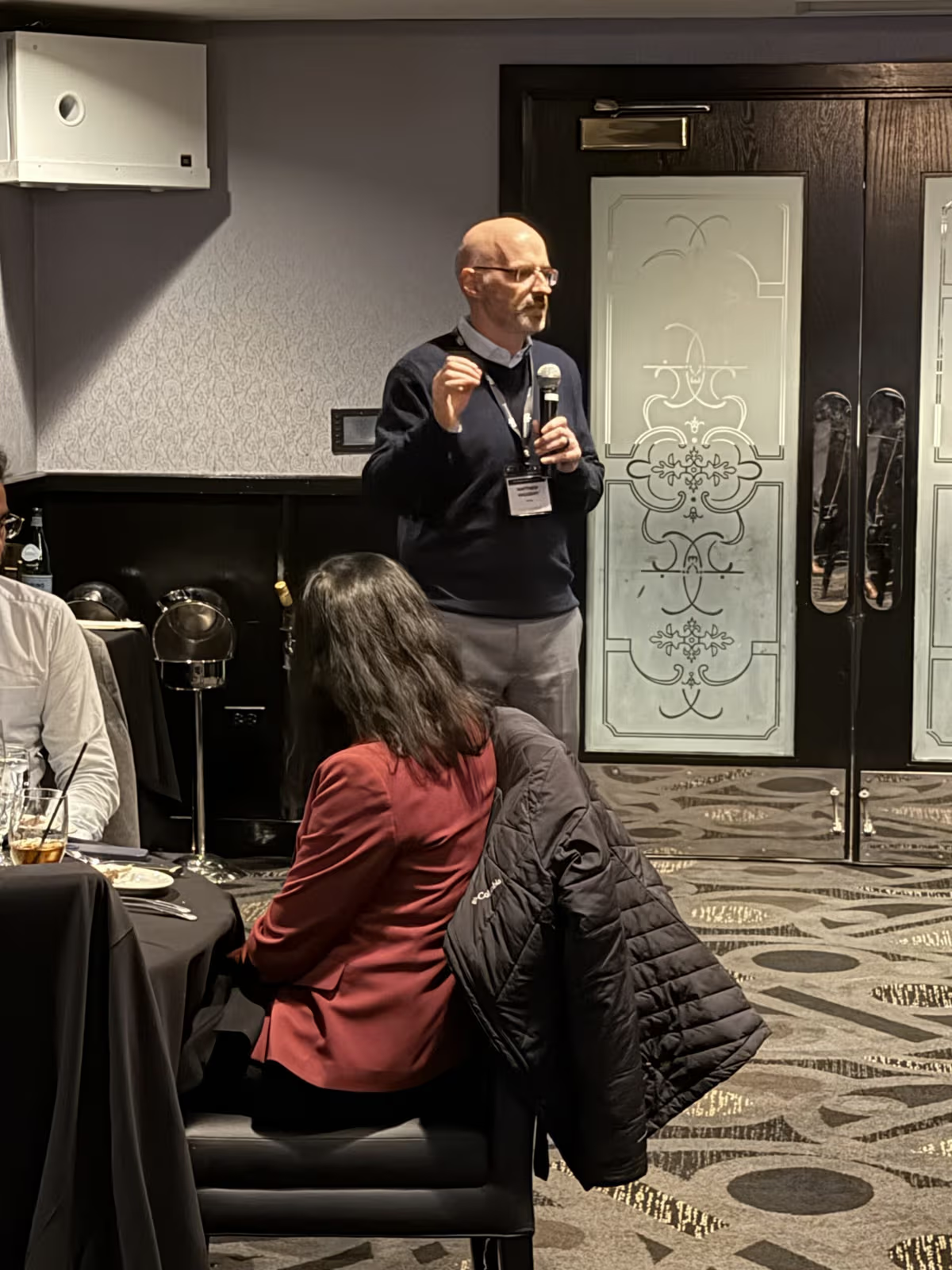
Matthew Halliday, 4Minds Chief Product Officer, moderates the discussion on business context, organizational knowledge, and AI applications beyond productivity at CDO Magazine’s Chicago Executive Boardroom Dinner on November 12.
The Conversations Behind the Technology
Although the discussion centered on AI, the connections between participants were an equally important part of the event.
Corey Maxner, CDO Magazine Senior Director, Community & Operations, summed the experience:
“What stood out in Chicago was how naturally the conversation moved from the technical side of AI to the people making decisions about it. These leaders are thinking about more than what the technology can accomplish. They’re considering how it fits their businesses, where human judgment matters, and what it means for the people working alongside it. That’s what makes these discussions valuable—hearing how peers are approaching the same challenges from different perspectives.”
Data, AI and Technology Leaders Who Joined the Chicago Conversation:
- Allyson Alston*, Former Mars Veterinary Health Global VP, Data & Analytics
- Michael C. Baker, NielsenIQ Vice President, Data Science | Advanced Analytics & AI
- Daniel Cromer, AIR Communities Data and Strategy Leader
- Anusha Dwivedula, Morningstar Director of Product Management, Analytics
- Anil Gutlapalli, Northern Trust Corporation VP, Enterprise Risk Data & Analytics
- Anish Gupta, CVS Health Lead Data Scientist
- Shuen Mei, Harbor Capital Advisors VP, Director of Software and Data Engineering
- Suma Nair*, JPMorganChase Executive Director – Strategy, Data & AI
- Prasannal Nithyanandam*, Elevance Health Head of Responsible AI / AI Enablement
- Dushyant Remivasan, Alight Solutions Director of Engineering, Head of Data Platform
- Purvi Savera*, former Alliant Credit Union Head of Data / Director, Data
- Rashmi Sinha, Johnson & Johnson Innovative Medicine Chief Architect, Innovative Medicine Data Fabric
- Frank Sung, Loop Capital Markets VP, Data Management
- Shawn Tumanov*, Alight Solutions Head of AI Governance and Enablement
- George Wang, FinTank CIO
- Hunsu Yun, ZoomInfo Senior Data Analyst
- Matthew Halliday, 4Minds Chief Product Officer
- David Jackson, 4Minds Enterprise Sales Executive
- Jeremy Latronica, 4Minds Enterprise Account Executive
- Julie White, 4Minds Senior Enterprise Account Executive
- Corey Maxner, CDO Magazine Senior Director, Community & Operations
*Allyson Alston, Suma Nair, Prasannal Nithyanandam, Purvi Savera, and Shawn Tumanov are members of CDO Magazine’s Global Board community.
CDO Magazine thanks 4Minds for supporting the Chicago Executive Boardroom Dinner and helping bring the city’s data, AI, and technology leaders together.
Join Chicago’s Data & AI Executive Community
The best conversations don’t end when dinner is over.
CDO Magazine’s Chicago executive community brings together data, AI, and technology leaders to exchange experiences, challenge perspectives, and build meaningful connections with peers across industries.
Want a seat at the table next time?
Connect with Corey Maxner, CDO Magazine Senior Director of Community & Operations, to learn more about upcoming Chicago gatherings and becoming part of this growing executive community.



 Elevate Your Personal Brand


