Leadership Summit – Chicago – Renaissance Chicago Downtown Hotel – September 17, 2026 Join top AI and Data leaders in Chicago to explore the strategies, governance, and innovations driving enterprise performance. Connect, learn, and gain actionable insights — reserve your seat today.
Webinar | The Multiplier Effect: How Top Data Leaders Translate Infrastructure into Business Impact Hear directly from leading data executives as they share how they are navigating data strategy, AI investment, and business value in the AI era.
Nominate Now | Top 30 Retail Data Changemakers 2026 Nominate for the Top 30 Retail Changemakers 2026, our annual recognition honoring visionary leaders who are redefining the retail landscape through data, AI, and analytics.
Opinion & Analysis
Unlocking Data’s Value in Life Sciences: How Unified Data Models Are Powering Transformation


Written by: Partha Anbil | SVP, Life Sciences at Coforge Limited, Vivek Suryanarayanan
Updated 11:54 AM EST, December 19, 2025

The life sciences and healthcare industries are undergoing a profound digital transformation. Organizations aspire to leverage rapidly expanding data sources — ranging from real-world evidence (RWE) to clinical and behavioral data — to drive better patient outcomes, efficiency, and equity. However, to seize these opportunities, they must overcome longstanding barriers, including fragmented data systems, inconsistent definitions, governance hurdles, and rising data management costs.
A Unified Data Model for Healthcare (UDMH) offers a proven framework to overcome these barriers. Let’s examine the challenges, the unified model solution, and see how forward-thinking companies are already implementing this approach.
The key data challenges holding back life sciences
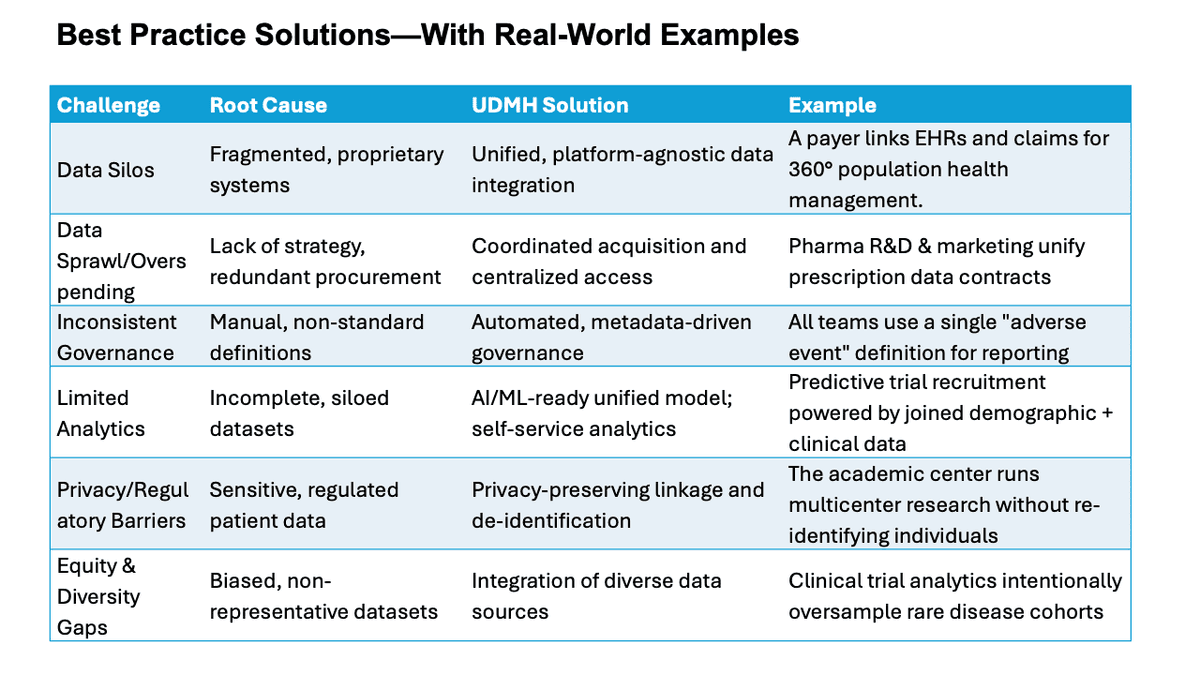
- Data silos: Healthcare and life science data are spread across proprietary systems and inconsistent formats, which prevent a holistic view across the patient journey and research lifecycle.
Example: A pharmaceutical company may track clinical trial data in one system and post-market patient outcomes in another. This disconnect slows the detection of safety signals and hinders the assessment of real-world value.
- Data sprawl and overspending: Uncoordinated data acquisition leads to redundant sources, increased costs, and inefficiencies.
Example: Separate departments (e.g., marketing, R&D, pharmacovigilance) individually purchase overlapping prescription and claims data, wasting resources that could be consolidated under a unified acquisition strategy.
- Inconsistent governance: Organizations struggle with multiple outdated data policies and manual processes, risking compliance issues and unreliable insights.
Example: Different definitions of “adverse event” or “patient eligibility” across teams lead to conflicting results in regulatory submissions and safety reporting.
- Limited analytical capability: Siloed data hinders the adoption of advanced analytics, machine learning, and AI, thereby limiting the ability to extract actionable insights and scale new solutions.
Example: A research team wants to build an AI model to predict adverse events, but cannot combine socioeconomic, clinical, and behavioral data due to interoperability limits.
- Privacy and compliance barriers: Sensitive patient information is protected by laws (like HIPAA), making secure, privacy-preserving data linkage essential.
Example: A health system wishing to analyze medication adherence by linking its Electronic Health Record (EHR) data with external pharmacy claims struggles to do so without violating privacy regulations.
- Diversity and equity gaps: Data may not adequately represent all population groups, resulting in potential bias and a lack of insights into minority or rare disease communities.
Example: A clinical trial dataset is skewed toward a single demographic, reducing the ability to assess effectiveness or safety for underrepresented populations.
The Unified Data Model for healthcare
To meet these challenges, organizations increasingly adopt pre-built Unified Data Model for Healthcare (UDMH) solutions from vendors such as NextGen Invent and IBM, as well as reusable schema frameworks from open industry bodies such as HL7 and OHDSI.
These solutions can be tailored, deployed as part of a phased digital strategy, or developed internally using modular, platform-agnostic methodologies. Access to product details is available via vendor websites, technical documentation, and collaborative standards groups.
A key advantage is the UDMH’s ability to harmonize data across legacy and cloud infrastructures without forcing disruptive changes. Platform-agnostic deployment is enabled through APIs, ETL tools, and connector layers, allowing organizations to migrate at their own pace while maintaining business continuity. Metadata-driven governance and robust interoperability frameworks ensure that new unified models align smoothly with existing analytic and operational processes.
Industry examples:
Widely referenced models include Oracle Healthcare Data Model, IBM Unified Data Model for Healthcare, NextGen Invent UDMH, and OHDSI OMOP CDM, each supported by real-world case studies demonstrating impact on analytics, compliance, and population health initiatives.
By leveraging these frameworks, organizations accelerate research, improve regulatory compliance, reduce costs, and foster health equity—all through a unified, future-proof approach to data.
The Unified Data Model for Healthcare (UDMH) is both a strategic approach and a suite of productized offerings. Leading technology providers, including IBM and select enterprise cloud vendors, now offer robust, pre-built UDMH solutions that organizations can tailor and deploy. Industry groups such as HL7 and open-source communities also provide reusable schemas for interoperability.
To meet these challenges, leaders are embracing a Unified Data Model for Healthcare (UDMH), which integrates payer, provider, revenue, clinical trials, behavioral, and supply chain data into a single, interoperable architecture.
What makes UDMH stand out?
- Comprehensiveness: Integrates all relevant domains—payer, provider, clinical, behavioral, trials, revenue, and risk data.
Example: An insurer integrates claims, lab, behavioral health, and care management data into a single model to manage chronic cohorts more proactively.
- Platform agnostic: Can be deployed on any IT infrastructure, bridging modern cloud solutions and legacy applications.
Example: A hospital group migrates its analytics from on-premise databases to the cloud without re-engineering core data models, preserving continuity. This platform-agnostic deployment is feasible because modern UDMH architecture utilizes modular, standards-based data models that are decoupled from infrastructure. Migration tools and APIs allow organizations to transition from legacy systems to cloud platforms, progressively mapping data to the unified schema without disrupting business operations. The UDMH does not necessitate a wholesale system replacement. Instead, it harmonizes the metadata, definitions, and data flows using connector frameworks and cloud-native integration layers.
- Threefold focus: Supports atomic integration (raw, granular data ingestion), analytic reporting (standardized metrics), and robust data governance (consistent business definitions).
Example: A pharma company creates uniform definitions of “enrollment”, “dropout”, or “responder” usable across clinical trials and commercial analytics, reducing errors and time-to-insight.
- Behavioral and clinical integration: Specifically designed to combine behavioral/mental health and clinical care for a true 360° patient view.
Example: A Medicaid payer incorporates substance abuse and behavioral health encounters alongside physical health claims to tailor interventions for whole-person care.
- Industry adoption: UDMH is trusted by leading North American payers, providers, and pharmaceutical companies — demonstrating proven value and an ecosystem of supportive partner solutions.
- Cost savings: Deploying a unified model routinely reduces warehouse build and management costs by 15–25%, with some seeing even greater savings through reduced duplication and streamlined analytics.
Driving outcomes and impact
The Unified Data Models industry models exist and are referenced here. For example, Oracle Healthcare Data Model, IBM Unified Data Model for Healthcare, and UDMH are proven solutions with documented case studies. Also, global collaboration is underway via HL7’s FHIR (Fast Healthcare Interoperability Resources) and OHDSI (Observational Health Data Sciences and Informatics) OMOP Common Data Model. These frameworks are publicly referenced and adopted across leading health systems and pharmaceutical organizations for analytics and interoperability.
Unified Data Models enable organizations to:
- Accelerate research and trials: Faster, more reliable recruitment by linking EHR, claims, and community health datasets.
- Advance real-world evidence: Seamless integration of clinical outcomes and social determinants supports robust regulatory submissions and post-market surveillance.
- Power population health: Enables personalized, targeted interventions for chronic and at-risk groups.
- Enhance compliance & security: Streamlines privacy-preserving data linkage, automates governance, and prepares organizations for evolving regulations.
- Foster health equity: Incorporates diverse, representative samples for more meaningful, generalizable insights.
Conclusion
The complexity and potential of life science data are continually growing. The Unified Data Model for Healthcare is not just an IT upgrade; it’s a strategic enabler for the industry’s data-driven future. By integrating, governing, and harmonizing critical data assets, organizations are unlocking new insights, efficiencies, and equitable outcomes — demonstrating that data, when unified, is truly transformative.
Disclaimer: The views expressed in the article are those of the authors and not of the organizations they represent.
About the authors:
Partha Anbil is at the intersection of the Life Sciences industry and Management Consulting. He is currently SVP, Life Sciences, at Coforge Limited, a $1.7B multinational digital solutions and technology consulting services company. He held senior leadership roles at WNS, IBM, Booz & Company, Symphony, IQVIA, KPMG Consulting, and PWC. Anbil has consulted with and counseled Health and Life Sciences clients on structuring solutions to address strategic, operational, and organizational challenges. He was a member of the IBM Industry Academy, a very selective group of professionals inducted into the academy by invitation only, the highest honor at IBM. He is a healthcare expert member of the World Economic Forum (WEF). He is also a Life Sciences industry advisor at MIT, his alma mater.
Vivek Suryanarayanan is a seasoned technology leader with over 18 years of experience driving digital transformation, data analytics, and GenAI solutions in the pharmaceutical and life sciences industry. He has deep expertise in leading product development teams and is highly proficient in cloud technologies and data management. He spearheads large-scale digital transformation programs and strategic initiatives at Takeda Pharmaceuticals. Before this, he served as a Sales Engineering Leader at Experian, providing technical consulting to life sciences and public sector organizations. In his prior role at PerkinElmer, he collaborated with 20+ pharmaceutical and health sciences companies to develop advanced analytics solutions for Clinical Data Review and Risk-Based Monitoring teams.



 Elevate Your Personal Brand