
Leadership Summit – Chicago – Renaissance Chicago Downtown Hotel – September 17, 2026 Join top AI and Data leaders in Chicago to explore the strategies, governance, and innovations driving enterprise performance. Connect, learn, and gain actionable insights — reserve your seat today.
Webinar | The Multiplier Effect: How Top Data Leaders Translate Infrastructure into Business Impact Hear directly from leading data executives as they share how they are navigating data strategy, AI investment, and business value in the AI era.
Nominate Now | Top 30 Retail Data Changemakers 2026 Nominate for the Top 30 Retail Changemakers 2026, our annual recognition honoring visionary leaders who are redefining the retail landscape through data, AI, and analytics.
Opinion & Analysis
The Forgotten Triangle: Why People and Process Must Lead Technology Again

Written by: Gopi Maren | Datapreneur — Commercializing Data & AI Beyond Governance
Updated 11:02 AM EDT, April 14, 2026
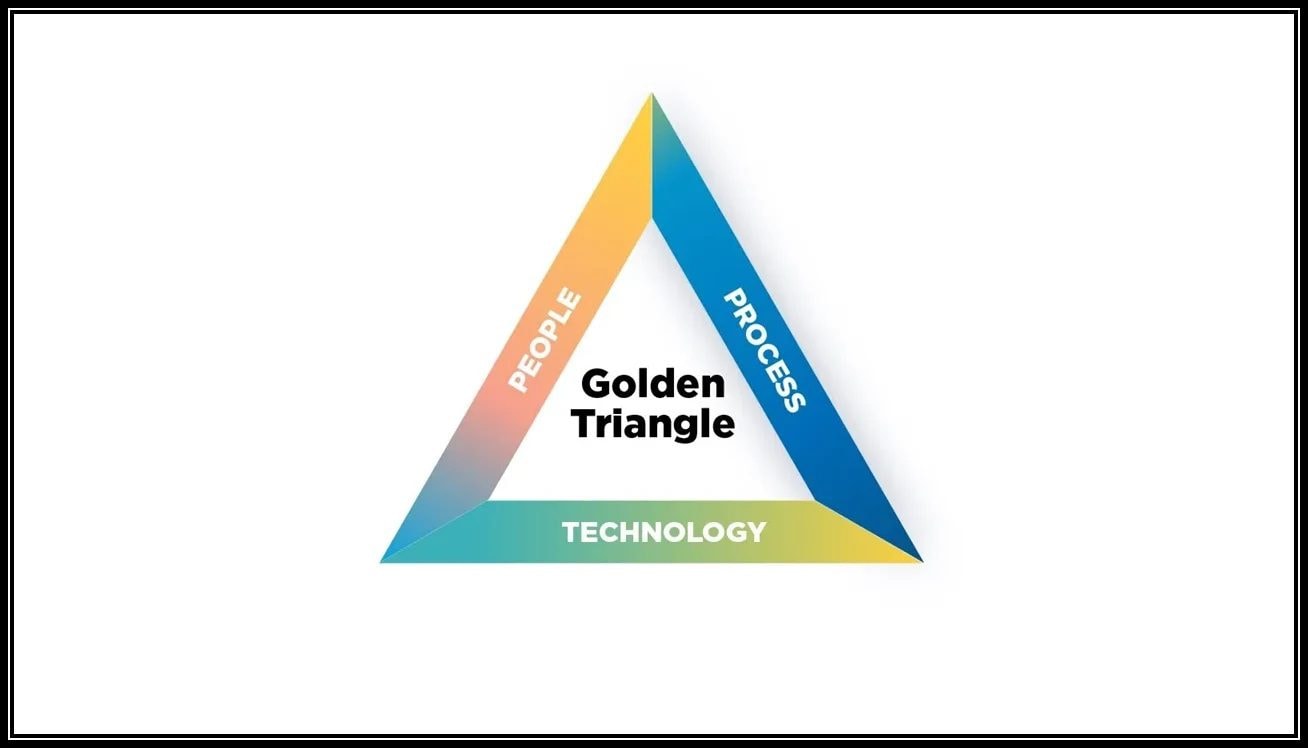
For decades, enterprise architecture has given us a deceptively simple truth: People, Process, Technology. Not as a checklist. Not as a maturity slide. But as a dependency chain. Yet somewhere along the way, especially in data, digital, and now AI-led transformations, we inverted the triangle.
Technology rose to the top, process became a blocker, and people were reduced to “change management.” And here we are still talking about the same problems.
The paradox we refuse to acknowledge
I’ve worked as a data management leader across regions, sectors, and regulatory landscapes, including banking, government, transportation, and platforms. Different domains, different cultures, and different mandates.
The challenges are identical.
- Poor data quality
- Unclear ownership
- Endless approvals
- Low adoption of “best-in-class” tools
- Frustrated teams bypassing governance to get work done
What’s striking is not the persistence of these problems. It’s our collective comfort in managing symptoms instead of fixing causes. We invest millions in platforms, we roll out frameworks, and we launch AI initiatives.
Yet we quietly accept that:
- People don’t understand why governance exists
- Processes are designed for control, not outcomes
- Technology is expected to compensate for both
That’s not transformation. That’s avoidance leading to more chaos.
Why technology keeps winning (and keeps failing)
Let’s be honest: technology is easy to fund.
- It has vendors
- It has demos
- It has roadmaps
- It promises speed
Process redesign is uncomfortable, people enablement is slow, and accountability is political. So organizations default to what feels tangible: tools over thinking. In the AI era, this bias has become dangerous.
We’ve subtly started to believe:
- Humans are the bottleneck
- Automation is neutral
- Intelligence can be outsourced to models
This is the most ironic moment in enterprise history; we are building intelligent systems on unintelligent foundations.
The real root cause: A human disconnect
The core issue is not technology maturity. It’s organizational misalignment across the hierarchy.
- Strategy speaks vision
- Middle management translates control
- Execution teams absorb friction
Governance becomes something “imposed,” not owned. Processes are written for audit, not for flow. People stop believing the system is there to help them and so they work around it.
- Shadow datasets
- Manual approvals
- Offline decisions
And leadership wonders why adoption is low.
Bureaucracy is not process, it’s a design failure
Here’s the uncomfortable truth: If your process makes it harder to do the right thing than the wrong thing, people will always bypass it. People are not frustrated by the process; they are frustrated by a badly designed process.
Contrast this with product-led organizations and startups:
- Clear ownership
- Minimal approvals
- Decision rights pushed to the edge
- Technology designed to amplify intent, not replace it
They don’t succeed because they ignore governance. They succeed because governance is embedded, invisible, and purposeful.
Reclaiming the original order: People → Process → Technology
The TOGAF triangle was never about balance, it was about the sequence.
- People define intent, accountability, and ethics
- Process translates intent into repeatable execution
- Technology accelerates what already works
Invert this order, and you scale dysfunction. In data governance and AI governance, especially:
- Tools don’t create trust, people do
- Automation doesn’t remove bias — process clarity does
- Models don’t make decisions — humans remain accountable
What needs to change now?
If we are serious about AI, data, and digital futures, we must:
- Stop treating people enablement as a “change phase”
- Redesign processes around decision velocity, not approvals
- Measure governance by business outcomes, not policy coverage
- Use technology to remove friction, not introduce new layers
- Accept that intelligence without responsibility is risk, not progress
A final provocation
The biggest risk in the AI era is not machines becoming smarter than humans. It’s organizations forgetting that humans are supposed to lead. Technology should never sit above people and process.
When it does, governance becomes theatre, and transformation becomes performative.
It’s time we stop managing the same problems more efficiently and start solving them at the root.
People first. Process with purpose.Technology as an enabler, not a crutch.
That was the foundation all along.
About the Author:
Gopi Maren is a Data & AI Governance leader with cross-regional experience across the UAE, Africa, and APAC, specializing in translating governance into real business value. He has led end-to-end data governance programs from strategy and operating models to tooling and high-impact use cases driving strong adoption while supporting regulatory and privacy requirements.
With data literacy at the core of his approach, Maren focuses on empowering people, strengthening stewardship, and building shared ownership of data. He is a strong advocate of metadata-led data governance, enabling scalable, automated governance-by-design across data quality, privacy, and AI.
Beyond enterprise delivery, Maren actively contributes to the regional and global data community through industry forums, executive roundtables, and thought leadership platforms. He is an engaged contributor within the GAFAI (Global Alliance for Artificial Intelligence) community, where he champions responsible, human-centric AI—balancing innovation with transparency, fairness, accountability, and privacy.
Maren’s professional mission is to help organizations across regions build trusted, resilient, and value-driven data and AI ecosystems, grounded in strong data literacy and metadata-driven governance, and aligned with ethical and regulatory expectations.



 Elevate Your Personal Brand