
What Is a Chief Data Officer in 2026? Many people working within the data industry are saying the same thing: the role of the Chief Data Officer (CDO) has changed – but how? CDO Magazine began an expert survey to find out. We recent...
2026 CDO Report: Meet the Modern Data Team New survey of VP & C-level data and AI leaders confirms what’s stalling AI transformation.
Generative + Agentic AI: Moving From Experimentation to Enterprise Scale Generative and agentic AI are making their way into enterprise production, bringing new questions for Chief Data Officers (CDOs) and other data and AI leaders responsible for making these technologies...
Opinion & Analysis
Are Humans Becoming More Like AI — And AI More Like Us?

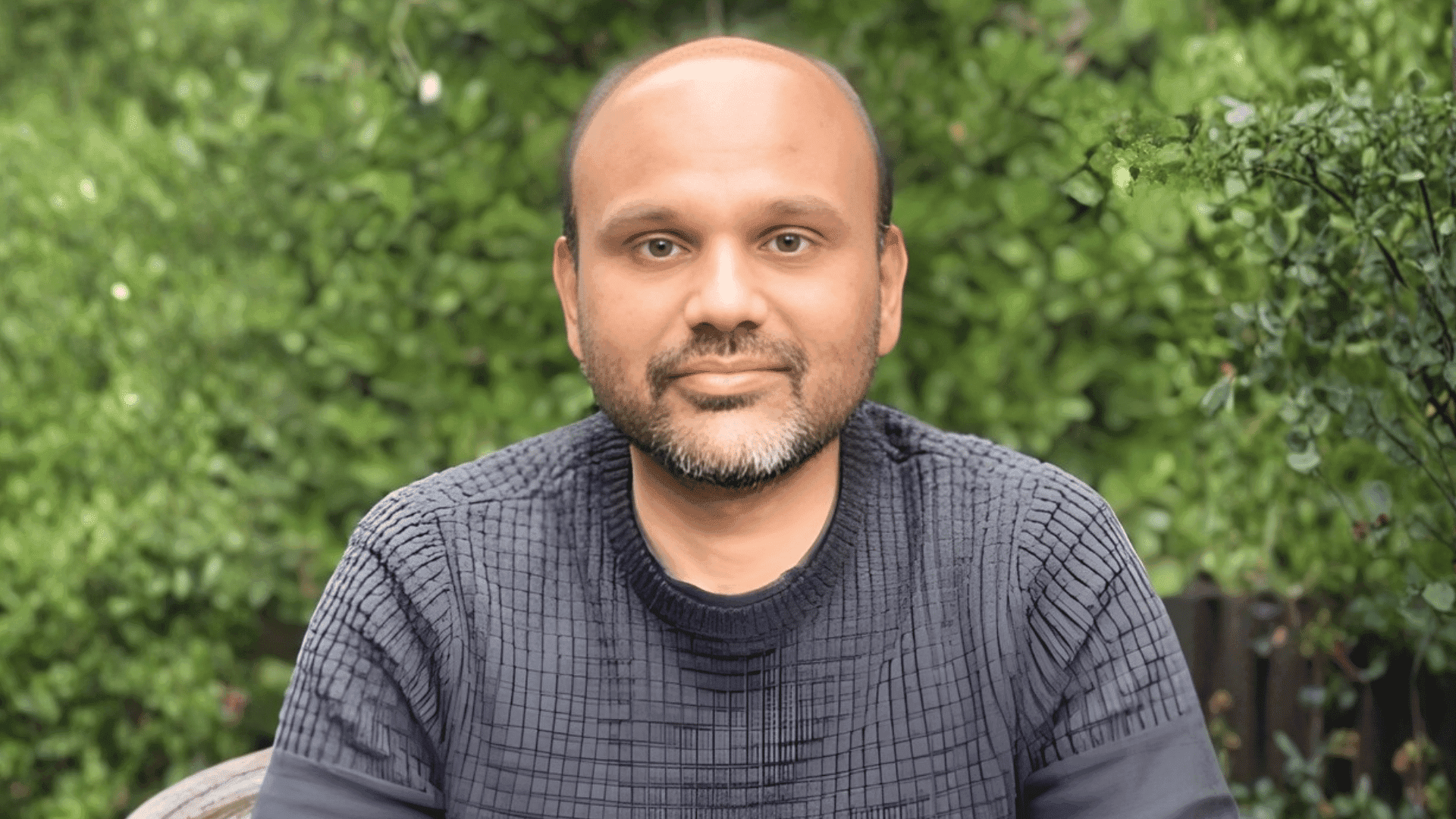
Written by: Ronak Shah | Managing Partner - Technology at Vikara AI
Updated 9:17 AM EST, December 23, 2025
As the year draws to a close and organizations reflect on an extraordinary year for AI, I’ve been wrestling with a provocative question: are humans becoming more like AI, and is AI becoming more human?
The rise of generative AI (GenAI) has already begun reshaping how organizations think about talent, decision-making, and competition. Leaders are grappling with fundamental questions about what experience is worth, how decisions should be made, and whether technology could one day replace teams entirely. These questions may sound futuristic, but they are already changing managerial practice today.
Three lessons stand out as especially relevant for leaders.
1. Experience is being repackaged, not replaced
For centuries, accumulated experience was the currency of success. Mastery took years of apprenticeship. Today, many assume AI tools diminish the value of individual experience. A young employee with the right model can now leapfrog traditional career ladders.
But here’s the paradox: the most advanced AI systems are powered by experience — just not their own. Every model is trained on human-generated data, much of it created by people with decades of expertise. Retrieval-augmented generation (RAG) systems work by pulling in carefully curated knowledge, often reflecting real-world judgment. Longer context windows in modern models essentially allow machines to “remember” and apply more of that hard-won experience.
For leaders, the implication is clear: don’t devalue human experience just because AI seems to accelerate learning. Instead, treat experience as a scalable asset. Organizations should invest in capturing the tacit knowledge of seasoned employees, structuring it so AI systems can amplify it for others. In this sense, experience hasn’t disappeared — it has become infrastructure.
2. Embrace the power of “it depends”
In many organizations, the phrase “it depends” is dismissed as hedging or indecision. Managers are pushed to give clear, confident answers, often in binary terms. But complex problems rarely have simple solutions, and rushing to judgment can backfire.
AI offers a useful reminder here. Early generative models often gave confident but shallow responses. By contrast, newer reasoning models perform better precisely because they weigh context and nuance. They consider multiple possibilities, follow chains of logic, and acknowledge trade-offs. Their success underscores what experienced leaders already know: the best answers often begin with “it depends.”
For executives, this has direct application. Instead of penalizing employees for nuanced answers, organizations should reward deeper reasoning. Leaders can create space for exploratory dialogue, encourage teams to test multiple hypotheses, and resist the pressure to simplify prematurely. In an age when AI itself is modeling more sophisticated reasoning, the real competitive advantage may lie in organizations that cultivate, rather than suppress, complexity in human decision-making.
3. One-size-fits-all rarely wins
There was a moment when it seemed a single, all-powerful AI model might dominate the field — or that technology would enable one-person companies to handle everything. But practice has proved otherwise. The most effective AI systems today often use multi-agent architectures, where different models interact, each specializing in a task. No single model can do it all; collaboration is essential.
The lesson for leaders is strikingly familiar. Just as organizations thrive on diverse teams with complementary skills, AI is moving toward ecosystems of specialized agents. Competition will not be won by betting on a single monolithic solution, but by orchestrating the right mix of tools, people, and processes.
This mirrors the broader imperative for human organizations: diversity, equity, and inclusion aren’t just moral imperatives — they are functional necessities. Complex challenges demand multiple perspectives and approaches. AI’s own evolution is proving that specialization and collaboration, not uniformity, create resilience and adaptability.
A shared evolution
I am an AI optimist. My work depends on it, and I believe these technologies will continue to change the world for the better. But the more closely I study AI’s evolution, the more I see its convergence with human realities. AI is becoming more human in its reliance on experience, nuance, and collaboration. At the same time, humans are becoming more machine-like — valuing speed, precision, and scale.
The challenge and the opportunity for leaders is to guide this convergence thoughtfully. Instead of asking whether AI will replace humans, a more productive question is: What can we learn from AI’s progress to become better leaders, decision-makers, and organizations?
- From AI’s reliance on experience, we can learn to preserve and scale institutional knowledge.
- From AI’s reasoning models, we can learn to embrace nuance instead of fearing ambiguity.
- From AI’s multi-agent architectures, we can learn that collaboration and diversity create strength.
If we take these lessons seriously, the future of leadership will not be man versus machine, but humans and AI evolving together. The more we understand this dynamic, the more likely we are to shape a world where both become smarter, more capable, and — paradoxically — more human.
About the Author:
Ronak Shah is a technology leader with expertise in product, data, and engineering, and a Co-founder and Managing Partner at Vikara AI. Prior to Vikara, he led Technology at Apna, and was responsible for scaling AI-driven platforms that impacted millions of job seekers and employers.
Previously, he held leadership roles at Coursera, Glassdoor, and Amazon, building data products and machine learning solutions. An active startup investor and advisor, Shah partners with founders to accelerate innovation and growth. Passionate about responsible AI and data-driven transformation, he focuses on building technology that empowers people, shapes businesses, and drives positive societal change.



 Elevate Your Personal Brand