
2026 CDO Report: Meet the Modern Data Team New survey of VP & C-level data and AI leaders confirms what’s stalling AI transformation.
Webinar | The Multiplier Effect: How Top Data Leaders Translate Infrastructure into Business Impact Hear directly from leading data executives as they share how they are navigating data strategy, AI investment, and business value in the AI era.
Understanding the ROI of Data Adoption Through a Data Product Marketplace The latest Gartner Hype Cycle for Data, Analytics and AI Leaders lists over 40 different solution areas, each of which covers multiple tools and capabilities. This shows the challenge that Chief Data...
Opinion & Analysis
7 Data Governance Moves That Determine Digital Transformation Success or Failure

Written by: Celio Oliveira | Chief Data Officer, Ministry of Finance, Canada
Updated 12:35 PM EDT, March 31, 2026

Digital transformations do not fail loudly at the start. They fail quietly in governance. A program begins with executive optimism, a confident roadmap, and early wins. Then the institution faces its first hard decision: whether to redesign or move forward when the evidence becomes ambiguous.
At that moment, the real constraint is rarely technology. It is the organization’s ability to make legible decisions that are owned, traceable, and defensible.
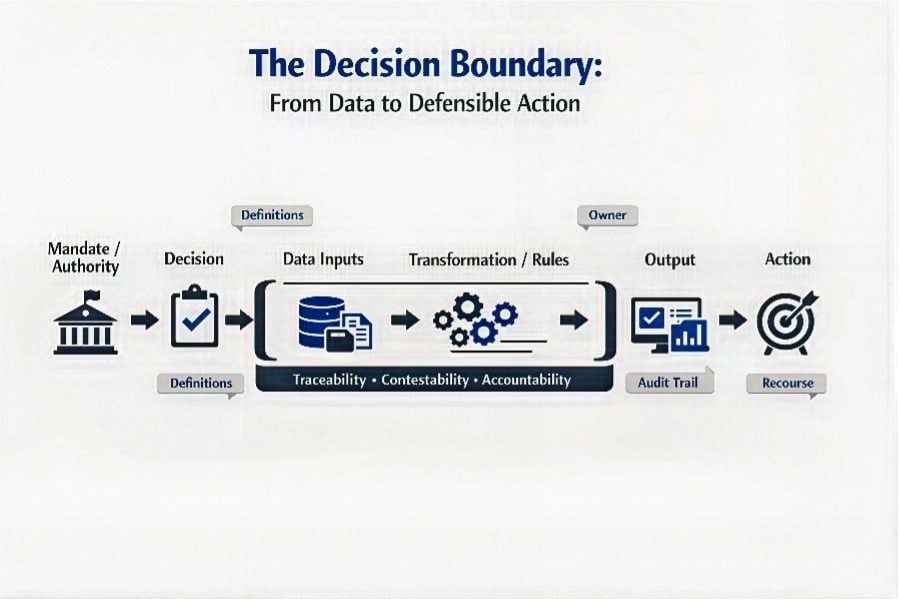
That is why I frame transformation (and evolution) as a decision problem disguised as a delivery solution. The most resilient programs do not simply modernize platforms. They build decision-ready data capabilities that let leaders govern complexity without pretending it is simple.
The concepts below are drawn from my upcoming book “Constitutional Intelligence: A Decision Architecture for Trustworthy AI Governance.” The operating model is the source of the structure that translates these ideas into practical moves for CDOs dealing with today’s conditions: tighter budgets, greater scrutiny, and accelerating demand for automation.
A mini-case vignette: the day the dashboard failed
In one public-sector modernization effort, a cross-functional team delivered what looked like a success: a consolidated executive dashboard intended to accelerate decisions. Early demonstrations were impressive. Leaders could finally see “one version of the truth,” and the transformation narrative gained momentum.
Then the first high-stakes briefing arrived. Two numbers that should have reconciled did not. Both were defensible. Both were wrong in different ways. As questions escalated, it became clear the organization had built a reporting surface faster than it built shared literacy: inconsistent definitions, undocumented transformations, unclear lineage, and no agreed-upon owner for critical metrics.
The dashboard did not fail because the visualization tool was weak. It failed because artifacts were missing at the decision boundary.
The recovery did not begin with more data engineering. It began with three governance resets:
- Naming accountable owners for key measures
- Creating a minimal decision template for metric changes
- Publishing lineage that non-specialists could understand
Once the decision path became legible, the technology started delivering value again.
This pattern repeats across sectors. When accountability sits above understanding, project delivery becomes procedural rather than strategic. Data leader Tony Labillois captures this sharply in the concluding chapter he authored for “Constitutional Intelligence”: “Institutions do not lose trust because they innovate; they lose trust when innovation outpaces accountability.”
7 moves that make transformation governable at scale
These moves are written for finance contexts, but they generalize to any high-accountability institution.
1. Start with the decision, not the platform
Many programs start with architecture and tooling. The stronger ones start with a decision inventory: what decisions are being supported or automated, what authority governs them, who owns the outcomes, and what harms attach to error.
This shift reduces “model shopping” and “dashboard sprawl” because the institution becomes explicit about where decisions must be explainable, contestable, and auditable.
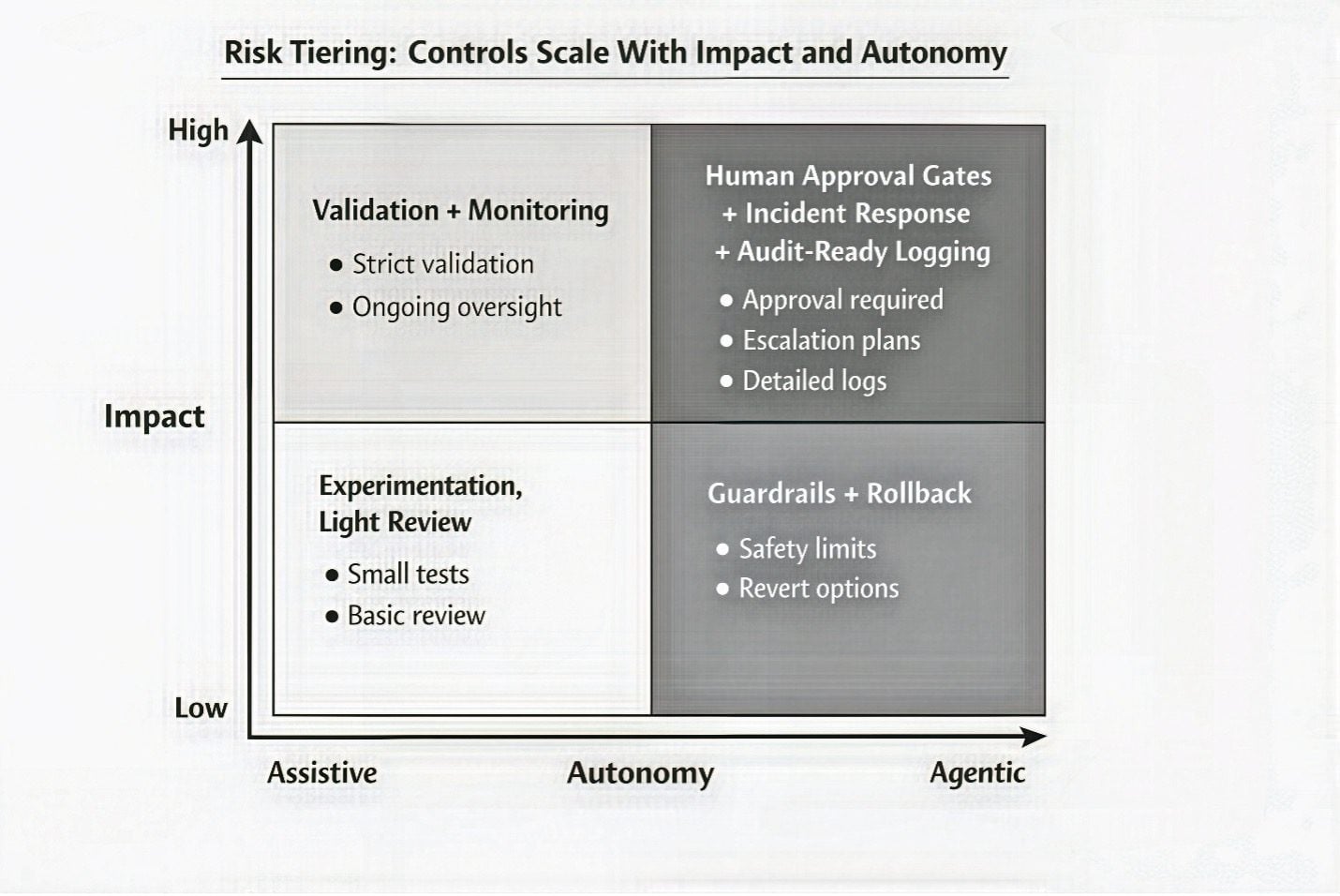
2. Tier risk the way finance already does
Finance organizations tier vendors, systems, and controls. Transformation becomes more governable when data, analytics, and automation use cases are also tiered by impact, reversibility, autonomy, data sensitivity, and change rate. Tiered approaches prevent the common failure mode where everything is treated as high-risk, so nothing ships, or low-risk, so controls arrive too late.
3. Make the inventory operational, not ceremonial
The register that exists for auditors is a theater. A usable inventory functions as a management tool: owner, accountable executive, permitted uses, dependencies, data sources, validation date, and monitoring signals.
For data products, this is where business definitions and lineage become enforceable rather than aspirational. The data inventory becomes the authoritative map of institutional knowledge.
4. Embed “legitimacy checks” into the lifecycle
In high-accountability environments, trust is a design requirement. Before scaling a capability, three checks are decisive: traceability (can we explain how outputs are produced), contestability (is there a path to challenge outcomes), and accountability (is there a named executive who owns the system’s behavior). These checks align well with NIST’s emphasis on governance, measurement, and documentation.
5. Engineer guardrails that constrain action, not just intent
Thresholds fail when they aren’t operationalized, when they remain values rather than measurable triggers. They work when they translate into operational constraints: what data may be used, what decisions require human review, what constitutes a material change, and what testing is required before expansion.
In practice, this is where data lineage, classification, and observability stop being “data team concerns” and become executive accountability.
6. Measure value, risk, and trust together
Transformation scorecards often over-measure activity and under-measure outcomes. A durable scorecard tracks three categories simultaneously:
- Value (cycle time, error rates, throughput)
- Risk (incidents, overrides, drift, audit findings)
- Trust (explainability success rate, escalation patterns, transparency artifacts produced)
When trust is measured, teams stop treating it as an afterthought.
7. Treat governance as a product with UX
One reason teams bypass control frameworks is that they are often designed for compliance, not adoption. Data leaders on CDO Magazine have repeatedly highlighted this in their transformation commentary. A product-grade approach is simple, tiered, and usable: it relies on clear stage gates, templates that reduce friction, and feedback loops that improve the process over time.
When it is easy and protective, teams bring it in early; when it is heavy and ambiguous, they route around it.
Why this matters now: The automation effect
Automation, especially GenAI and agentic capabilities, does not just add new tools to the stack. It acts like a stress test, exposing weaknesses that have been tolerated in calmer times: unclear lineage, inconsistent definitions, diffuse ownership, and controls that look solid on paper but fail under operational pressure.
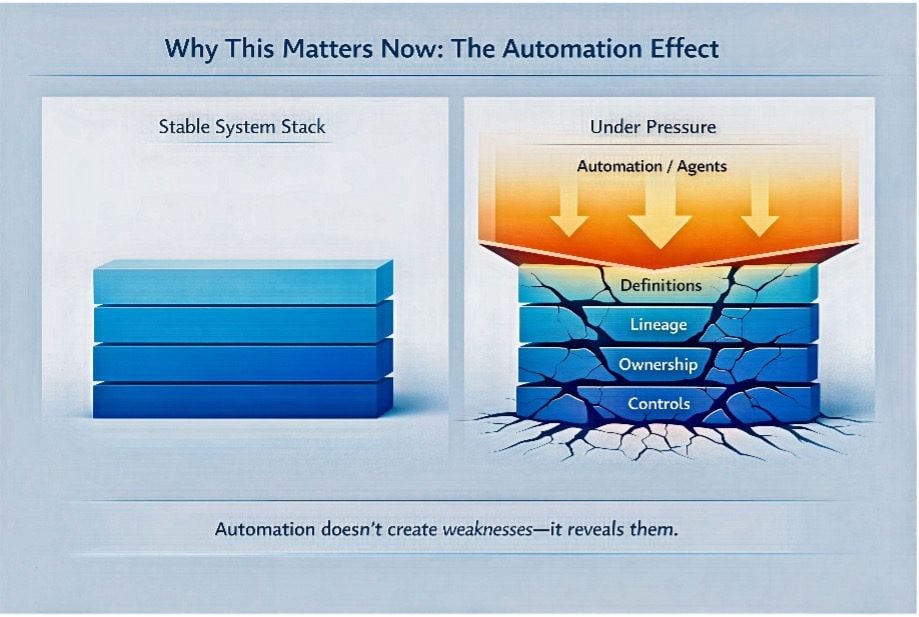
That does not mean the transformation narrative should revolve around AI. This means data leaders must plan for a near-term reality where automation becomes embedded in everyday workflows. When automated outputs influence decisions, institutions need evidence-based pathways that are legible: clear data provenance, defined accountability, and monitoring that can detect drift, misuse, or unintended outcomes.
The stewardship imperative lies in attainable speed; the higher standard being speed with legitimacy. Institutions earn the right to scale when they can make system behavior explainable, keep it within authorized constraints, and intervene rapidly when outcomes drift from intent.
References:
-
https://www.nist.gov/publications/artificial-intelligence-risk-management-framework-ai-rmf-10
-
Dudoit, Alain, Labillois, Tony, and Oliveira, Celio. 2026. Public Sector Data Interoperability and Responsible Adoption of AI in Canada: Strategic Overview and Call to Action (2026PR-02, For reflection, CIRANO.) https://doi.org/10.54932/PUUN9151
-
Oliveira, C. 2026. Constitutional Intelligence: A Decision Architecture for Trustworthy AI Governance. FriesenPress. ISBN 978-1-03-835671-0
About the Author:
Celio Oliveira is a senior public-sector executive specializing in enterprise data strategy, data governance, and the responsible deployment of trustworthy AI at scale. In his new role as Chief Data Officer at the Canadian Ministry of Finance, he will help advance the federal government’s evidence-based decision-making agenda, strengthening the policy and delivery foundations required for measurable public outcomes.
His forthcoming book, “Constitutional Intelligence: A Decision Architecture for Trustworthy AI Governance,” introduces a practical decision architecture for accountable, human-centred AI in complex institutional environments.
Oliveira holds an MBA in Digital Marketing and a Master’s in Human-Centred Data Science (Knowledge Media Design specialization) from the University of Toronto.



 Elevate Your Personal Brand