
2026 CDO Report: Meet the Modern Data Team New survey of VP & C-level data and AI leaders confirms what’s stalling AI transformation.
What Is a Chief Data Officer in 2026? Many people working within the data industry are saying the same thing: the role of the Chief Data Officer (CDO) has changed – but how? CDO Magazine began an expert survey to find out. We recent...
The 6-Layer Operational Framework for Enterprise AI Agility What does AI agility mean? AI agility refers to how fast an AI system—and the organization behind it—can adapt to shifting data and market conditions. AI agility is all about speed and adaptability. I...
Leadership
Why the Chief Data and AI Officer Role Keeps Struggling: Rethinking Executive Leadership for the AI Era

Written by: Dr. Hong Gui | Founder & Principal Consultant, Laurel Consulting LLC
Updated 10:00 AM EDT, October 6, 2026

The Chief Data & AI Officer (CDAIO) has become a rapidly evolving executive role in organizations today. Despite growing investment in data and AI, the role continues to experience high turnover, shifting responsibilities, and ongoing uncertainty about where it belongs within the executive team.
A common question organizations ask is: What should the CDAIO own?
Should the role own governance? Analytics? AI? Data quality?
We’re asking the wrong question.
All these areas seem fair, but they start from the same assumption that the CDAIO is another functional executive. I believe that assumption is precisely why the role continues to struggle. It misses an essential point: data and AI are not simply business functions. They are better understood as enterprise capabilities.
Functional leadership and capability leadership are fundamentally different
To understand why the CDAIO has been so difficult to define, we first need to distinguish between two fundamentally different forms of executive leadership: functional and capability leadership.
Organizations have long been organized around functional leadership. The Chief Financial Officer (CFO) leads financial activities, the Chief Operating Officer (COO) oversees operations, and the Chief Information Officer (CIO) leads the information services.
Each functional executive leads a business area that runs specialized operations to fulfill a distinct business purpose or provide a specific service for the enterprise. The executive is directly accountable for that area’s outcomes, and success is measured by its operational performance.
The CDAIO belongs to a different category of executive leadership: capability leadership. The spectrum of data and AI work extends far beyond the boundaries of a centralized department. Its greatest value comes when data and AI are embedded into operational workflows and decision-making processes across the enterprise.
When organizations treat data and AI as technical services, they create a structural divide between business and technology. Business needs become project requests, while data and AI teams respond by delivering AI models and data solutions as products. The result is a transaction-based relationship rather than the continuous operational integration required for successful AI adoption.
Instead of integrating data and AI into everyday operations, organizations rely on a request-and-delivery model, which scales projects and products, but does not scale operational adoption (Figure 1).
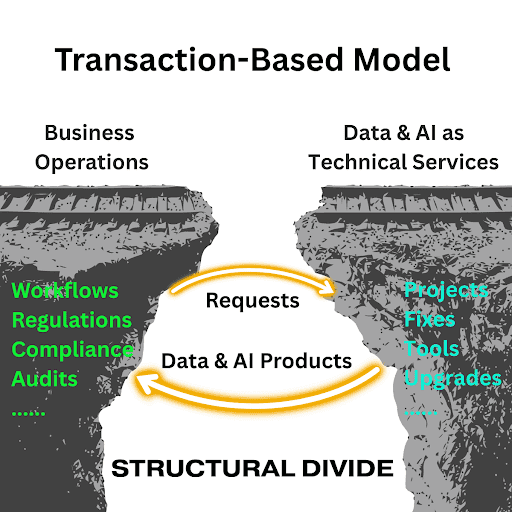
Figure 1: What happens when data and AI are treated as technical services
These are two complementary forms of executive leadership. Functional leaders create value through operational execution, while capability leaders create value by enabling others to execute operations more effectively. The success of a capability leader is reflected in the performance of the people and business functions they support. Their goal is not to lead the highest-performing department within the organization, but to help every business function perform at a higher level.
Capability leadership therefore requires organizations to think differently about how the role is designed, staffed, and measured.
Why the role keeps struggling
When organizations define the CDAIO as another functional executive, they set up expectations that are difficult for any executive to realistically satisfy.
When the CDAIO is expected to improve AI adoption without owning business operations, or to improve business outcomes without managing business areas, they lack the organizational authority needed to make real and sustainable changes.
On the other hand, when the CDAIO is charged with owning the traditional data and AI areas, such as governance, data and AI development, and data quality, they face the structural divide between technical services and business operations. Their attention naturally shifts towards optimizing the performance of the data and AI department. Success may then be measured by delivering more dashboards, building more AI models, implementing new technologies, or improving technical performance.
These are all valuable achievements from the data and AI department’s perspective. But they are not necessarily what the business needs most.
For example, in my own work within a healthcare organization, the data team in the Information Services (IS) department was highly capable of building data solutions for our business users. Over roughly ten years, we developed thousands of Crystal reports and hundreds of QlikView dashboards.
Meanwhile, the Electronic Health Record (EHR) system used by the organization had many built-in data and AI capabilities, with the vendor continuing to invest significantly in this area.
As our product inventory grew, we began to realize that adding another data product was not always the best way to meet an operational need. A clinical department might benefit far more from adopting a built-in reporting functionality in the EHR system than having another dashboard developed for them — the built-in tools generally integrate better with the clinical workflow.
The biggest struggle I experienced wasn’t the lack of technology or talent to build great data products. It was how to optimize the resources and technologies to increase the business’s capability to use data and AI in everyday operations.
I learned that data and AI leadership cannot focus on the outcome of a specific department. Its objective should be to build data and AI capability across the entire organization.
Viewing the CDAIO role primarily through the lens of functional ownership puts organizations at risk of pursuing conflicting goals, leading to misalignment, waste, and disappointing business outcomes.
The real mission of the CDAIO
Recognizing the CDAIO as a capability leader does not mean the role lacks clear accountability. Quite the opposite. Like every executive leader, the CDAIO should have a well-defined mission. Its primary responsibility should not be to operate another department that delivers data and AI services, but to build the enterprise data and AI capability system that enables every business function to apply data and AI for better business outcomes (Figure 2).
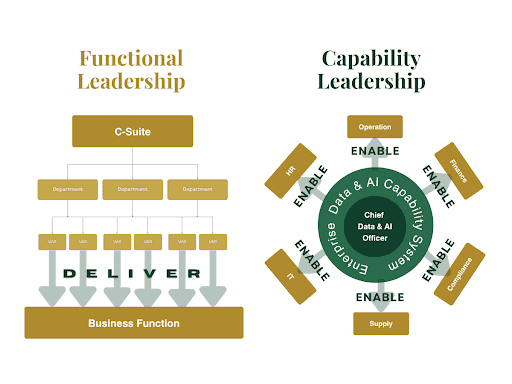
Figure 2: Two Complementary Forms of Executive Leadership
The enterprise data and AI capability system includes the organizational foundations that allow data and AI to be applied consistently and effectively in every functional area across the organization, such as:
- Governance
- Stewardship
- Metadata
- Workforce
- Enterprise best practices
- Cross-domain coordination
- Operating models for adoption and execution
As an example, my EHR experience made me realize the need for professionals who can operate effectively across the business and technical boundary. In addition to technical analysts who specialize in developing data solutions and AI models, organizations should have data and AI professionals embedded within business areas who can contribute directly to operational execution. Ideally, these professionals combine deep operational knowledge with data and AI expertise in their business domain.
The mission of these data and AI professionals is to help ensure that technologies are applied effectively within operational contexts while facilitating collaboration between business and technical teams. The CDAIO office can play an important role in supporting and coordinating this workforce across the enterprise. That may include developing training opportunities, facilitating knowledge sharing, and promoting enterprise best practices.
The success of the CDAIO should be measured differently
Recognizing the CDAIO as a capability leader changes how organizations evaluate the success of this role. Too often, organizations measure the CDAIO by the number of dashboards produced, AI models deployed, or projects completed. These metrics emphasize productivity, but they do not necessarily reflect organizational capability.
A more meaningful yardstick is whether the organization itself is becoming increasingly capable of using data and AI to improve business performance. Stronger business ownership and stewardship can provide evidence of that progress, as can greater data and AI literacy across the workforce. The organization should also be able to sustain adoption and coordinate data and AI efforts across business domains.
These changes may be harder to quantify than the number of dashboards or models produced, but organizations can still establish concrete measures. Examples include:
- Number of business domains with leadership groups maturing in data and AI ownership
- Number of formally recognized data and AI stewards
- Number of published business terms and metrics in the enterprise metadata system
- Number of data and AI experts embedded in business domains
- Utilization rate of AI models by business users
These metrics are different from the conventional business or IS metrics. They can help steer the organization toward better AI scaling and adoption rather than simply increasing the inventory of data and AI products, which can become more confusing and harder to maintain over time. Ultimately, the success of the CDAIO is not simply reflected in what the office delivers directly, but in what the organization becomes capable of achieving through data and AI.
A new way to think about executive leadership
As AI becomes more deeply embedded in business operations, organizations will need more than the technology itself. They will also need the capability to apply data and AI effectively across the business. That makes the CDAIO’s leadership in building the enterprise data and AI capability system increasingly important.
Functional leadership remains important. Organizations will continue to need executives responsible for finance, operations, technology, and other business functions. At the same time, enterprises need leaders whose responsibility is not to own another function, but to build capabilities that strengthen all the existing functions.
Perhaps the question was never: “What should the CDAIO own?”
A better question is: “What enterprise capability should the CDAIO build so every business function can succeed with data and AI?”



 Elevate Your Personal Brand