What Is a Chief Data Officer in 2026? Many people working within the data industry are saying the same thing: the role of the Chief Data Officer (CDO) has changed – but how? CDO Magazine began an expert survey to find out. We recent...
Generative + Agentic AI: Moving From Experimentation to Enterprise Scale Generative and agentic AI are making their way into enterprise production, bringing new questions for Chief Data Officers (CDOs) and other data and AI leaders responsible for making these technologies...
Webinar | The Agentic Mindset Shift: How to Onboard an Agentic Data Team Three sessions, real playbooks, proven results you can replicate.
Branded Content
Connected Systems Do Not Mean Understood Data: The Business Context Foundation Enterprise AI Needs
Enterprises have spent a decade connecting their data. The next advantage comes from giving every system, team, and AI agent a shared understanding of what that data means, and governing what they are allowed to do with it.

By: DataModal
As Told To: CDO Magazine
Updated 8:00 AM EST, November 13, 2026
Enterprise AI value depends on turning fragmented information into connected, governed intelligence that can drive business outcomes.
Most large enterprises have already made the investments that were supposed to make them AI-ready. Cloud platforms, lakehouses, and catalogs are in place. Returns remain uneven. In McKinsey’s latest state of AI survey, 44 percent of respondents say AI is scaling across their enterprise, and 37 percent attribute at least some EBIT impact to it. Gartner predicts that through 2026, organizations will abandon 60 percent of AI projects unsupported by AI-ready data.
For Chief Data and Analytics Officers and Chief AI Officers, the constraint on enterprise AI strategy is rarely models or compute. It is shared business meaning. Enterprise AI will not scale on data connectivity alone. It requires a governed business context foundation that turns fragmented data into trusted intelligence and, ultimately, into governed action.
Why connected data is not enough
Consider how a new AI use case gets delivered. A team locates sources, negotiates access, reconciles what “customer,” “active account,” or “net revenue” means in each system, builds pipelines, and adds controls. The next team, in another business unit, repeats most of that work.
Point-to-point integration moves data, but it does not carry meaning. Each connection adds cost and fragility, and definitions are reinvented project by project. The symptoms are familiar:
- Conflicting definitions that erode trust in dashboards and model outputs
- Engineering and governance effort repeated for every initiative
- Controls applied after the fact rather than at the point of use
- AI pilots that perform well in isolation but stall at enterprise scale
Access to data and understanding of data are different problems, and the second determines whether AI can be trusted.
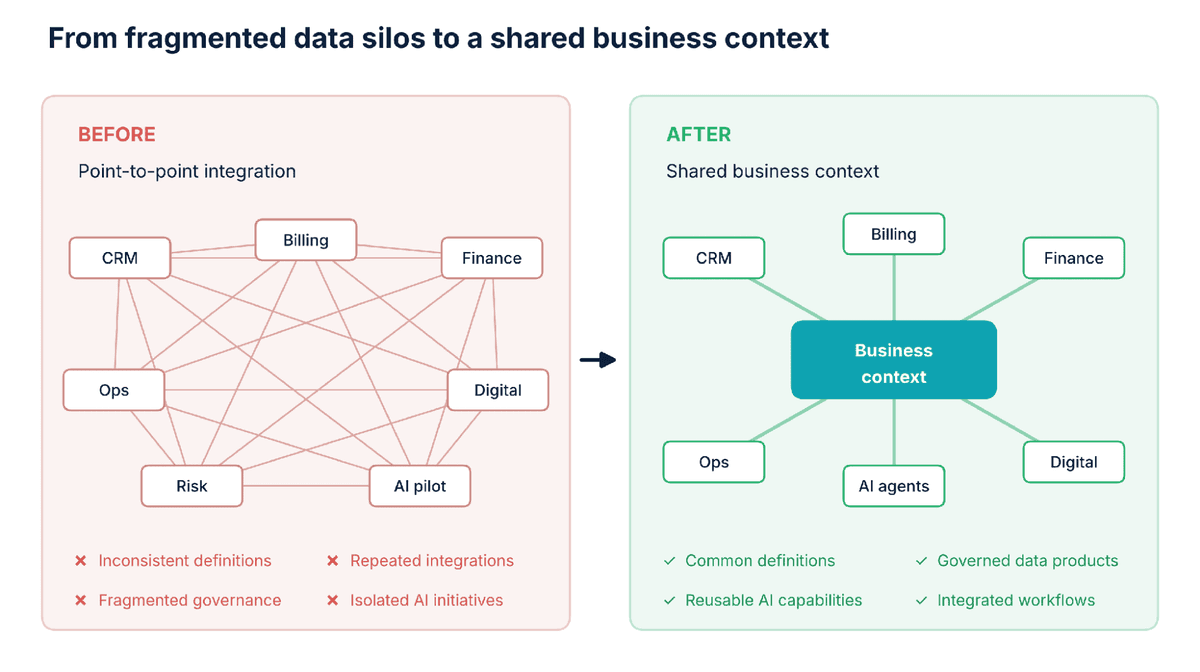
Figure 1. From fragmented data silos to a shared business context
Point-to-point integration multiplies connections and reinvents meaning for each project. A shared business context lets systems and AI agents reuse common definitions, governed data products, and policies.
Business context as enterprise infrastructure
The organizing principle of the data estate is shifting from pipelines to shared context. That context has three working parts:
- A semantic layer establishes a governed business vocabulary and calculation logic, so finance, risk, and AI applications interpret “customer” the same way.
- Ontologies and knowledge graphs describe how concepts relate. A customer holds several accounts, belongs to a household, and interacts across channels. Connecting those relationships gives a fraud model or service copilot context that no single table holds.
- Governed data products package trusted data with definitions, quality rules, ownership, and policy, so it is built once and reused.
DataModal’s platform is designed to bring these parts together, combining automated data discovery and profiling, metadata intelligence, canonical industry models, ontologies, a knowledge graph, and policy in one context layer. An intelligent router delivers governed data products through APIs, SQL, messaging, files, event streams, or the Model Context Protocol (MCP), an open standard for connecting AI applications to data and tools.
Automating data discovery, mapping, standardization, and provisioning does not eliminate integration work, but it shifts skilled teams from rebuilding foundations toward the use cases that matter most.
“Leaders have spent too long preparing the same information for every new request. When fragmented data becomes governed, contextualized, discoverable data products, the CDAO stops preparing data and starts delivering reusable intelligence.”
— Jojy Mathew, Co-founder and CEO, DataModal
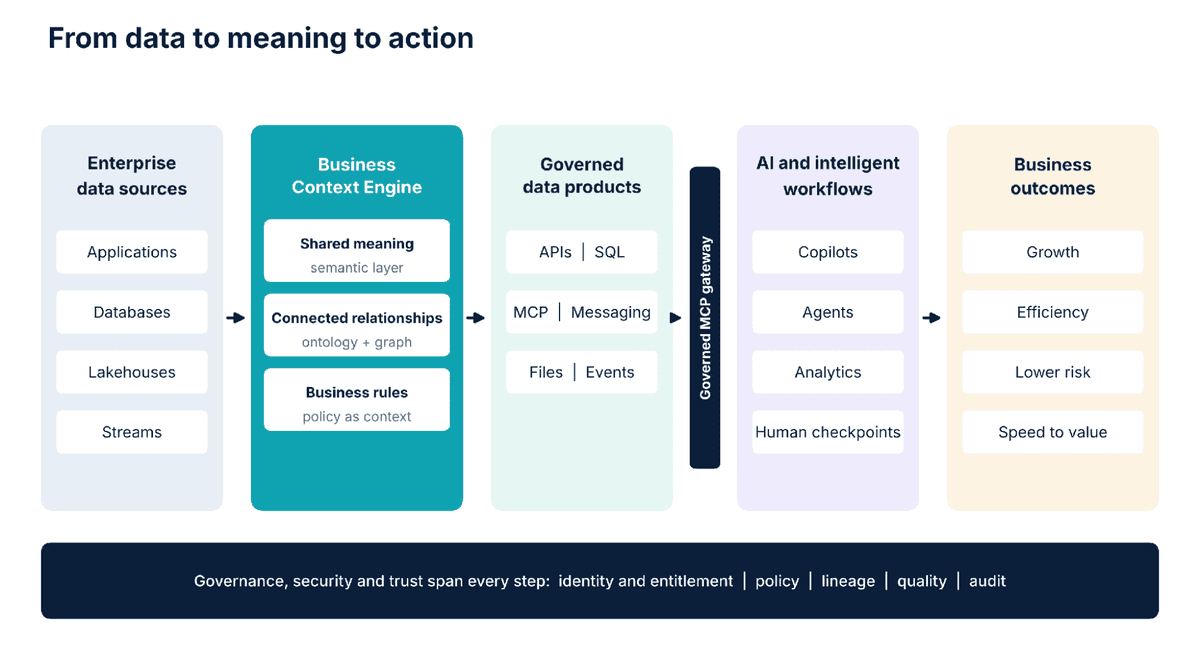
Figure 2. How a business context foundation works: from data to meaning to action
The Business Context Engine connects what enterprise information is, what it means, who may use it, and what business action it can support. Governance, security, and trust span every step. Simplified conceptual view.
From trusted context to governed AI execution
Agentic AI raises the stakes. An agent that triggers workflows must know whom it acts for, what it may see, and which actions require human approval.
In DataModal’s architecture, AI interactions pass through a governed MCP gateway that applies authentication, authorization, policy evaluation, rate limiting, and immutable audit. A control plane manages agent, prompt, and model registries and runtime governance. Context injection assembles only permitted context for each request, workflows can include human checkpoints, and monitoring feeds outcomes back into context, models, and policy.
Enterprise data governance becomes part of execution rather than a review after it, with lineage, quality, privacy, and observability operating in the runtime that serves the AI.
“Technical scale depends on trusted building blocks. When semantic models, policies, and governed services are shared across the architecture, engineering teams stop rebuilding the same plumbing and start composing new capabilities on a common foundation.”
— Ranga Maramraju, Co-founder, Head of Engineering DataModal
Translating architecture into business outcomes
For the C-suite, the test is not how much technology is deployed but what changes. A shared context foundation maps to five outcomes:
- Growth: consistent customer and product context supports personalization, new services, and sharper commercial decisions.
- Efficiency: reusable data products reduce duplicated engineering and manual reconciliation.
- Risk: policy enforced at the point of use improves transparency and audit readiness.
- Time to value: trusted, contextualized data shortens the path from AI pilot to production.
- Scale: business units build AI solutions within centralized governance and common standards.
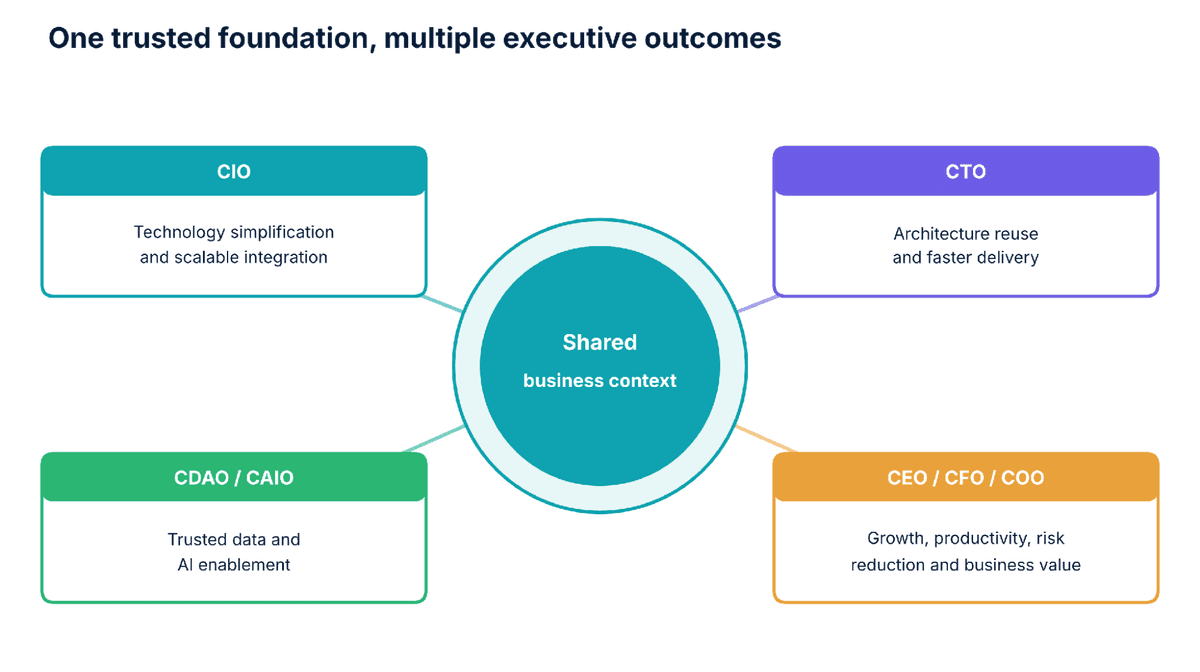
Figure 3. One trusted foundation, multiple executive outcomes
A shared business context serves different leadership priorities from the same governed foundation.
Consider two industry patterns. In financial services, one governed model of customers, accounts, transactions, and risk can serve fraud detection, onboarding, regulatory reporting, and service copilots. In industrial enterprises, connected asset, maintenance, and supply chain context can support predictive maintenance. In both, each new use case reuses what the first built.
The approach is intended to extend existing investments, not replace them.
“Organizations should not have to rebuild the technology estate for every new initiative. A reusable business context layer lets them get more from the platforms they already run, reduce integration complexity, and deliver information to people, applications, and AI in one governed way.”
— Kirstan Vandersluis, Co-founder, DataModal
What CDAOs and CAIOs should do next
Enterprise AI transformation is a staged capability, not a single deployment. Start where business value and data readiness intersect. Five questions offer a practical assessment:
Five questions every CDAO and CAIO should ask
- Can our teams consistently define and interpret the same business information across systems?
- How much data engineering and governance work is repeated for every new use case?
- Can AI applications and agents securely access the business context they need, and only that context?
- Can we trace and govern AI decisions and actions across the enterprise?
- Can we measure the business impact of reusable data and AI capabilities?
Then pick two or three high-value workflows, define their shared entities, publish them as governed data products, and track reuse alongside business KPIs. If the foundation works, each new use case should cost less than the last.
“Data and AI should be judged by the business value they create, not by the amount of technology deployed. When enterprise data carries shared meaning and governed access, AI stops being a set of experiments and becomes something the CFO can measure in growth, productivity, and risk.”
— Thomas Mazzaferro, Co-founder, President DataModal
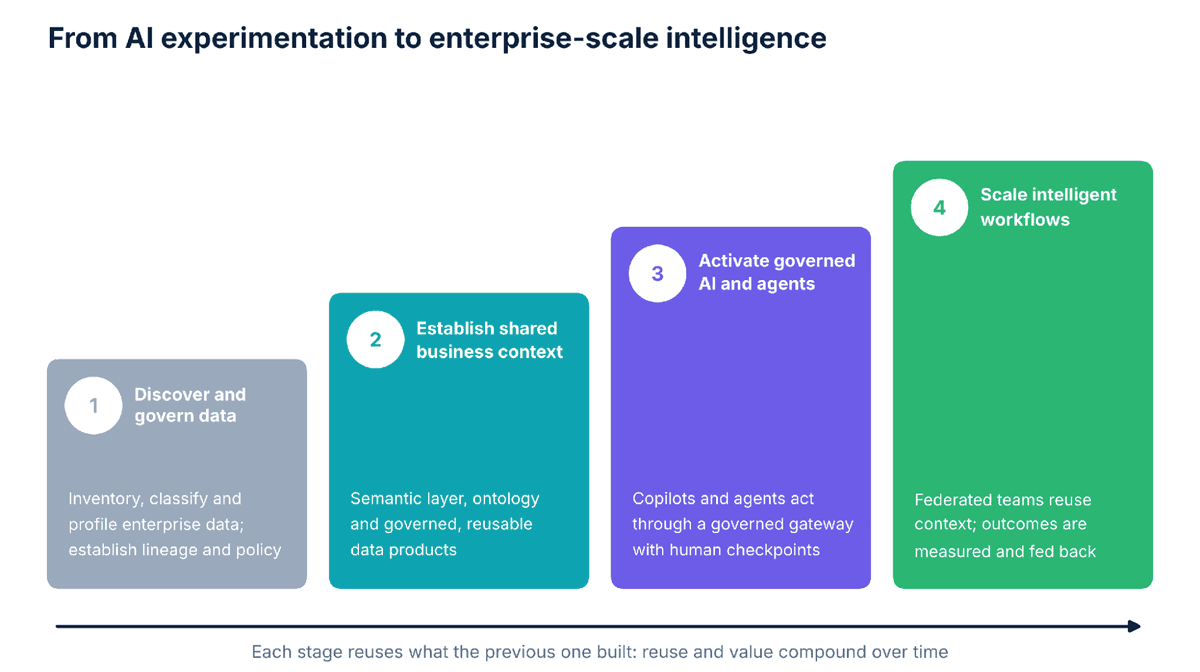
Figure 4. From AI experimentation to enterprise-scale intelligence
Enterprise AI transformation is a staged capability-building journey in which each stage reuses what the previous one built. Stages overlap in practice, and timing varies by organization.
The enterprises that lead the next phase of AI will not necessarily have the most models or the largest lakehouse. They will be those whose systems, people, and agents share an understanding of the business and operate within clear boundaries. Connected data was the last decade’s achievement. Understood, governed, actionable data is this decade’s opportunity.



 Elevate Your Personal Brand


