
2026 CDO Report: Meet the Modern Data Team New survey of VP & C-level data and AI leaders confirms what’s stalling AI transformation.
Webinar | The Multiplier Effect: How Top Data Leaders Translate Infrastructure into Business Impact Hear directly from leading data executives as they share how they are navigating data strategy, AI investment, and business value in the AI era.
Understanding the ROI of Data Adoption Through a Data Product Marketplace The latest Gartner Hype Cycle for Data, Analytics and AI Leaders lists over 40 different solution areas, each of which covers multiple tools and capabilities. This shows the challenge that Chief Data...
Artificial Intelligence
OpenAI Offers Free ChatGPT Access to Academic Researchers

Written by: Neelakshi Chakraborty, Reporter, CDO Magazine
Updated 5:50 PM EDT, August 4, 2026
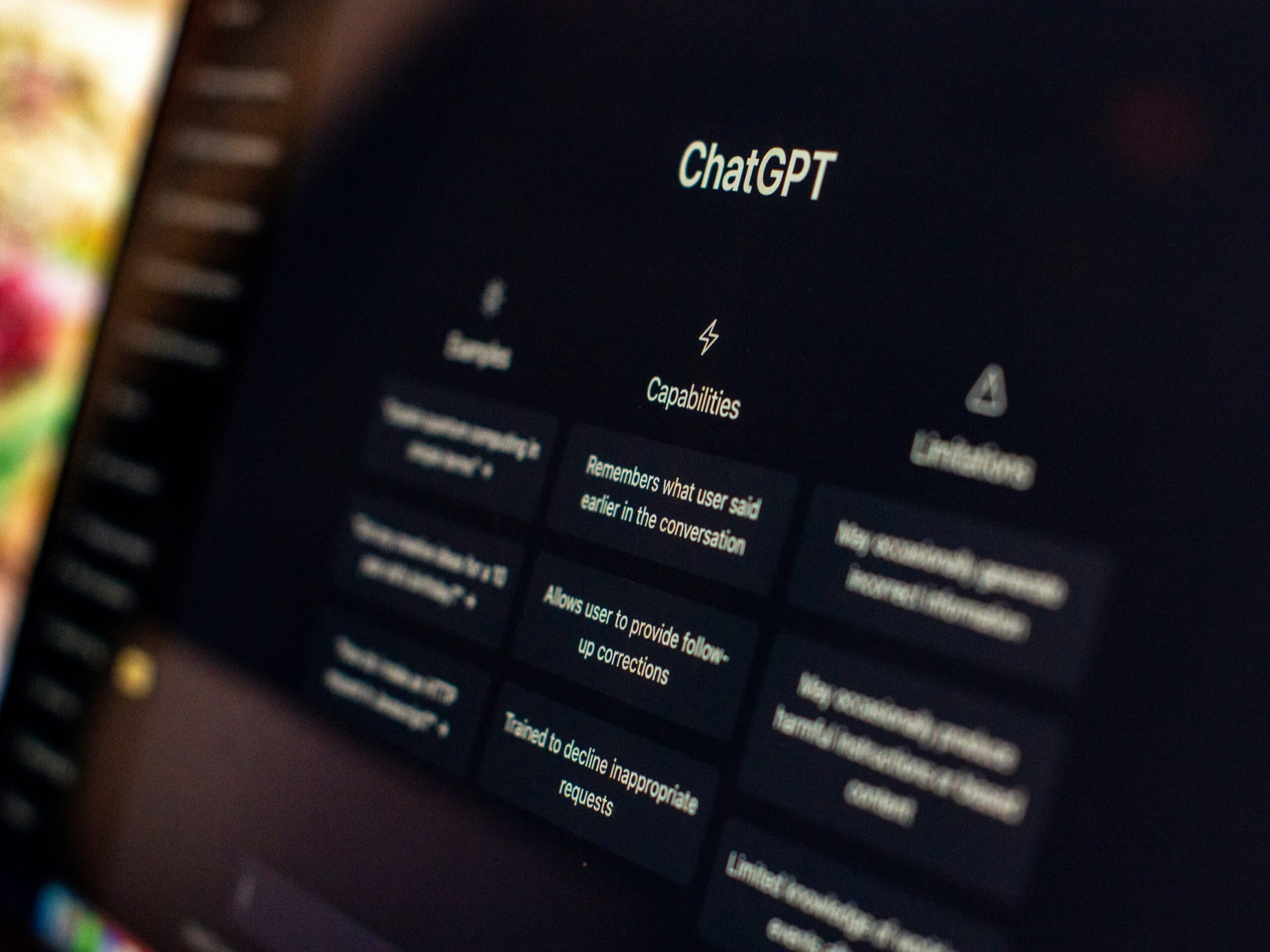
Photo credit: Unsplash.com
OpenAI has introduced ChatGPT for Academic Researchers, a program designed to give researchers at selected academic institutions free access to its frontier models. The company said the program will support researchers across science, mathematics, and engineering as they work on advanced problems, accelerate discovery, and improve productivity.
The program will begin with 10,000 researchers this summer, with access already available at institutions including the Institute for Advanced Study and École normale supérieure. OpenAI plans to expand the program to 100,000 researchers through 2027.
Frontier Models for Research Workflows
Participants will have access to OpenAI’s frontier models, including GPT-5.6 Sol Pro at launch, and may invite up to four collaborators from their institution. Workspaces will include business-grade privacy and security protections, and data will not be used to train OpenAI’s models by default.
Researchers will be able to use ChatGPT, ChatGPT Work, and Codex for tasks including genomic analysis, protein modeling, literature reviews, grant writing, and publishing. The program will also include training, hands-on support, and opportunities for researchers to share feedback with OpenAI and learn from one another.
OpenAI said the initiative is part of its more than $250 million through 2027 to support external scientific research and discovery. That includes NextGenAI, its $50 million initiative supporting research institutions, and work with the Department of Energy’s Genesis Mission to bring frontier AI to researchers at national laboratories and universities.
Why It Matters
OpenAI said roughly 1.3 million people use ChatGPT each week for advanced science and mathematics, generating about 8.4 million messages. The company said researchers use ChatGPT and Codex across nearly every stage of scientific work, from interrogating ideas and generating hypotheses to writing code, analyzing results, and communicating findings.
The program will provide access to expanded deep research, higher usage limits, and larger context windows. OpenAI said participants will also be able to use more than 75 life science skills across genetics, genomics, sequencing, single-cell analysis, protein modeling, and drug discovery, along with connectors for scientific literature, public genomic and clinical databases, satellite imagery, computational notebooks, data platforms and reference managers.
Eligible institutions must be recognized degree-granting colleges or universities with a high level of research activity. Applicants will need to verify their institutional affiliation and provide information about their active research and intended scientific use, while collaborators must also verify their affiliation and count toward the program’s total number of accounts.



 Elevate Your Personal Brand