What Is a Chief Data Officer in 2026? Many people working within the data industry are saying the same thing: the role of the Chief Data Officer (CDO) has changed – but how? CDO Magazine began an expert survey to find out. We recent...
Generative + Agentic AI: Moving From Experimentation to Enterprise Scale Generative and agentic AI are making their way into enterprise production, bringing new questions for Chief Data Officers (CDOs) and other data and AI leaders responsible for making these technologies...
Webinar | The Ontology Advantage: Scaling AI Across the Business Join TextQL and CDO Magazine to explore how a governed ontology can accelerate AI transformation across your organization.
Artificial Intelligence
NVIDIA Launches Open Science AI Models and 50,000-Question Chemistry Dataset for Research Agents

Written by: Tathagata Sen
Updated 4:20 PM EST, November 16, 2026
Picture credit: NVIDIA
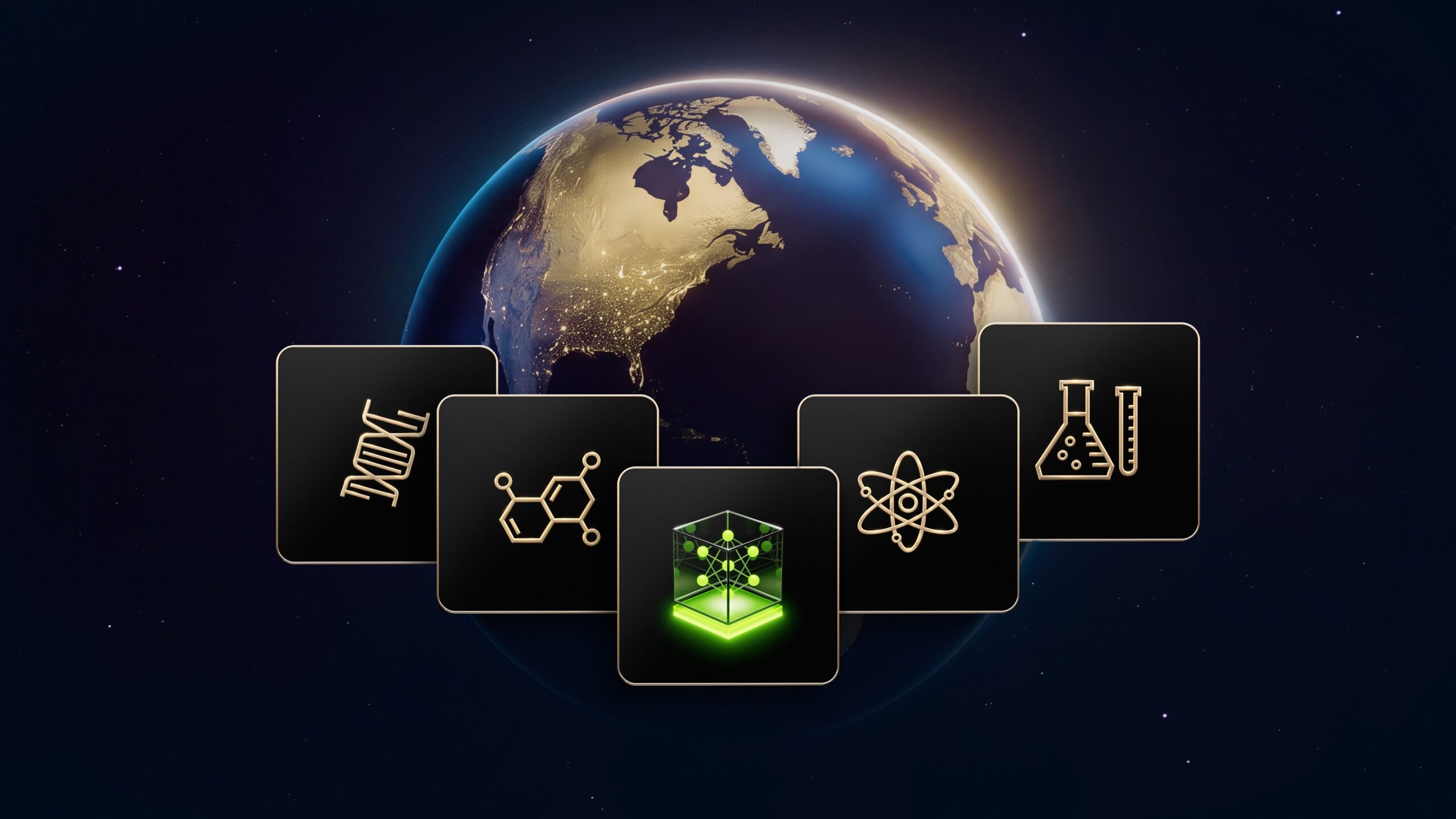
NVIDIA has introduced Nemotron for Science, a collection of open AI models, scientific evaluations and training resources designed to help researchers build specialized AI agents for scientific discovery, according to an NVIDIA release.
Announced November 16 at the SC26 conference in Chicago, the release includes a new chemistry dataset with nearly 50,000 questions for training and evaluating models.
The initiative builds on NVIDIA’s Nemotron 3.5 Super VL model and provides post-training recipes that researchers can use to adapt AI systems to specialized scientific tasks. Applications include chemistry experiments, protein design, molecular property prediction and the development of laboratory protocols.
Open Dataset Supports Specialized Scientific AI Agents
The new LitmusBench v0.2 dataset draws on molecular properties and experimental drug-discovery data. It is designed to help researchers evaluate and improve AI models’ ability to reason about chemistry, including predicting how molecules behave and how the human body processes them.
Research organizations are already applying the models to scientific workflows. Argonne National Laboratory is integrating Nemotron into a multi-agent system for designing and evaluating protein-based therapeutic candidates. Other collaborators include Lila Sciences, Terray Therapeutics and the Jülich Supercomputing Centre.
NVIDIA says the models and dataset are available through Hugging Face, allowing researchers to adapt them to their own scientific applications and infrastructure.
Scientific AI Depends on Domain-Specific Data Quality
For chief data officers (CDOs), the initiative illustrates the importance of structured, domain-specific datasets in developing specialized AI capabilities. Scientific agents need access to reliable experimental information, consistent data representations and relevant evaluation benchmarks to produce results that researchers can assess and reproduce.
As organizations build AI systems for specialized fields, data governance must account for how scientific information is sourced, validated, prepared and reused across model training and agent workflows.
The distinction between AI governance and data governance becomes particularly important when models are expected to generate insights that inform scientific research and experimentation.




 Elevate Your Personal Brand


