
What Is a Chief Data Officer in 2026? Many people working within the data industry are saying the same thing: the role of the Chief Data Officer (CDO) has changed – but how? CDO Magazine began an expert survey to find out. We recent...
Generative + Agentic AI: Moving From Experimentation to Enterprise Scale Generative and agentic AI are making their way into enterprise production, bringing new questions for Chief Data Officers (CDOs) and other data and AI leaders responsible for making these technologies...
Webinar | The Agentic Mindset Shift: How to Onboard an Agentic Data Team Three sessions, real playbooks, proven results you can replicate.
AI Governance
Who Owns the Context Layer?
Architecting Accuracy, Control, and Agility in the Era of Agentic AI

Written by: Murali R. Kallem | Head of Data & AI, Box
Updated 9:00 AM EDT, October 28, 2026

(This article originally appeared in CDO Magazine’s Trend Report, Generative + Agentic AI: Moving From Experimentation to Enterprise Scale.)
As enterprises move from passive conversational AI to autonomous operational agents, a new foundational tier is emerging: the context architecture. This architecture is the key to architectural sovereignty – the strategic imperative that enterprises must own their context layer to avoid vendor lock-in and operational risk. This article examines the failures that result from a missing context tier, defines the target architecture required for enterprise-grade agents, and presents a 12-month roadmap for retaining architectural control.
Why Enterprise AI Needs a Context Layer
Modern enterprises now require agents capable of executing complex, multi-hop operational tasks across fragmented SaaS platforms, data warehouses, and legacy ERP suites. As leading models converge for many enterprise use cases¹, the bottleneck to reliable autonomous operation increasingly becomes situational enterprise context. It is important to understand that large language models (LLMs) lack innate awareness of an organization’s domain definitions, real-time entity relationships, dynamic access policies, or operational state.
To bridge this gap, enterprises need shared context capabilities connecting data, policies, tools, and intelligence models. However, accepting vendor-hosted context architectures risks creating fragmented intelligence islands and platform lock-in. To preserve flexibility, organizations should own critical context assets while using interchangeable vendor capabilities.
What Is the Context Layer?
Think of the context layer as an organization’s institutional memory or its operational nervous system – its brain. It is the digital scaffolding that allows agents to understand not just data, but business rules and compliance policies in real time. Without this, agents are like perennial new employees with access to a library of documents but no knowledge of how the company actually runs.
Where Enterprise AI Architectures Fall Short
The rush to deploy agents without a dedicated context layer has exposed severe flaws in modern software architectures, as demonstrated by the following composite illustrative scenarios.
1. Traditional Semantic Layer Gaps (BI vs. Operational AI)
Historical semantic layers were engineered for human analytics, mapping tabular database columns to financial metrics. Autonomous agents, however, require operational semantics. They must understand business entities, cross-system relationships, and transactional dependencies to answer operational questions.
When agents interact directly with legacy BI semantic layers, they receive flat tables stripped of the business constraints necessary to mitigate risks or execute contract modifications. For instance, an agent lacking “special terms” awareness might blindly renew a high-volume contract, violating compliance policies.
2. Prompt Engineering Limits and Context Window Bloat
Without a structured context engine, teams resort to “prompt packing” – brute-force insertion of raw JSON into system prompts. This compromises accuracy² (as LLMs ignore buried constraints) and unnecessarily inflates token costs.
Illustrative Scenario – EMEA AE Over-exposure: An EMEA account executive asks the agent for “closing strategies for top-tier deals.” Without a context layer to scope the payload to the user’s region, the application packs raw global deal logs into the prompt. The payload contains unredacted, confidential U.S. Federal defense contract notes. The LLM processes this out-of-scope data, incorporating restricted U.S. positioning into the EMEA rep’s summary, violating non-disclosure policies.
3. Unregulated Tool Use and MCP Threading Issues
While integration standards like the Model Context Protocol (MCP) streamline tool invocation, the protocol specification is stateless and does not maintain persistent execution memory across calls³. This forces agents to treat interactions as isolated events, leading to state drift and execution failure.
Illustrative Scenario – Order Cancellation / Duplicate Refund: An agent receives the instruction “Cancel Order #8820 and credit the account.” It invokes a warehouse tool to halt shipment and a billing tool for the refund. The warehouse API returns a non-fatal warning code. Lacking session state tracking, the agent misinterprets this as a transaction failure. It loses variable tracking for the Order_ID, re-invokes the billing API, and executes a duplicate $1,200 refund to Stripe while the shipment continues.
Owning the context layer enables persistent state tracking and transactional memory, which prevent these types of costly execution drifts that occur when agents operate in isolation.
4. The Data-Layer Security Blindspot
Data-layer controls govern source access but may not cover context assembly, model exposure, or tool execution.
Illustrative Scenario – Unmonitored $50,000 Refund: Data-layer security cannot enforce procedural rules. If an agent calls a billing API for an account credit, the API key validates connection rights but not business logic. Without a policy engine, the agent can execute an unvetted $50,000 refund without triggering human-in-the-loop approval.
A dedicated context layer closes this gap by enforcing procedural business logic and attribute-level privacy controls that standard data-layer security tools are not designed to handle.
The Target Architecture for Agent-Ready Context
Enterprises should establish a vendor-neutral context architecture spanning three capabilities, as visualized in Figure 1.
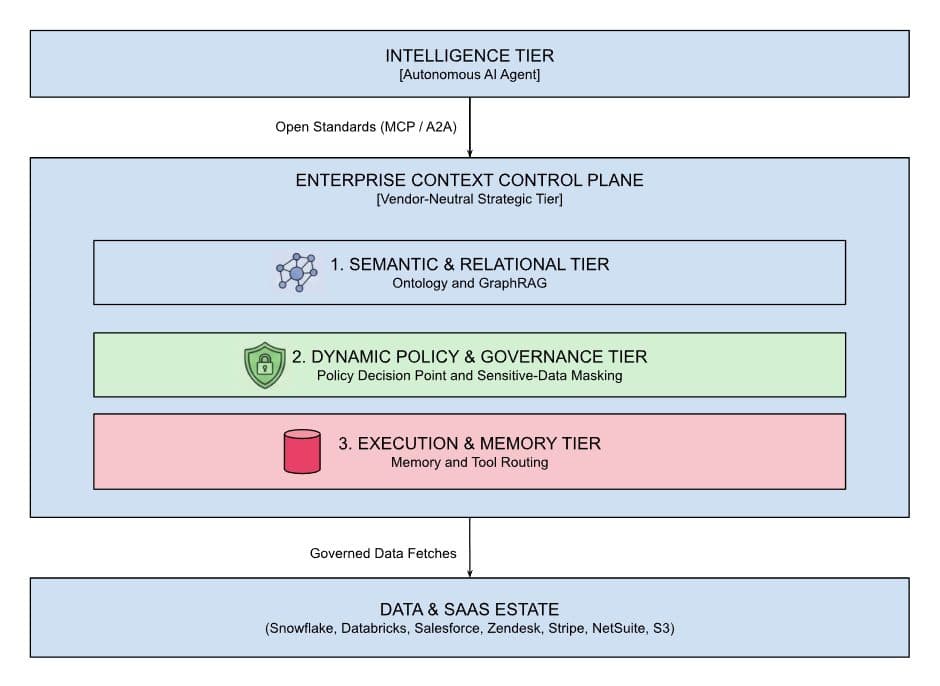
Figure 1: Target Enterprise Context Architecture
1. The Semantic and Relational Tier (Ontology + GraphRAG)
This tier replaces flat vector search with enterprise ontologies paired with Graph-based Retrieval-Augmented Generation⁴ (RAG). By structuring explicit custom business concepts, entity hierarchies, and operational dependencies, this tier provides the deterministic context provenance and verifiable data lineage that foundation models natively do not have exposure to.
This structured context grounds probabilistic LLM reasoning in verifiable enterprise truth and keeps every autonomous action auditable back to its authoritative source.
2. The Dynamic Policy and Governance Tier (External PDP)
Governance is externalized into a Policy Decision Point (PDP) using frameworks like Open Policy Agent or Cedar.
- The context layer intercepts execution requests and extracts user/environmental attributes
- The PDP evaluates RBAC/ABAC rules at runtime
- The layer masks sensitive attributes before context is compiled, supporting policy enforcement and compliance
3. The Execution and Memory Tier
This tier governs how agents invoke enterprise tools while preserving state across multi-step workflows. A managed MCP gateway standardizes tool definitions, permissions, and invocation patterns. Cross-system entity resolution maps identifiers such as Customer, Order, and Contract across platforms. Durable execution memory records prior actions, responses, and transaction status to prevent state drift, duplicate actions, and incomplete workflows.
Who Should Own the Context Layer?
Shared context infrastructure requires sustained investment, and enterprise ownership should follow a federated model: a central Data and AI platform team owns shared architecture and interoperability; business domains own definitions and operating rules; Security and Governance own policy standards; and application teams consume these capabilities through governed interfaces.
Relying entirely on proprietary managed services, however, creates significant risks:
- Context silos: A vendor’s context engine is bounded by its data perimeter, remaining blind to operational state in third-party channels
- Context lock-in: If business ontologies and security policies are trapped in a vendor’s black box, migrating data platforms becomes cost-prohibitive
- Sovereign auditability: Regulations increasingly require data provenance and traceability⁵
Phased Implementation Plan
A phased approach can help organizations build toward an agent-ready architecture, as outlined in the suggested 12-month roadmap in Table 1.
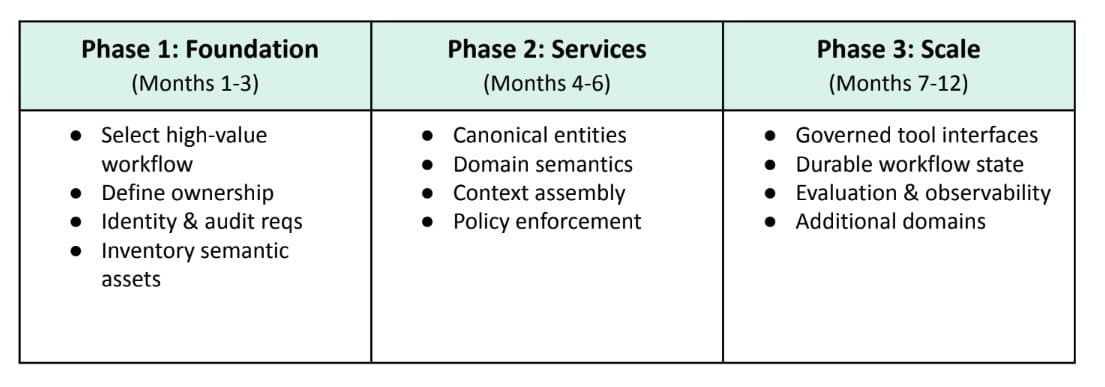
Table 1: Suggested Phased Implementation Plan
Conclusion
Enterprise AI success will increasingly depend on how context is governed and controlled.
For chief data officers (CDOs), overseeing this shared architecture is an extension of their responsibilities for enterprise data governance and accountability.
By retaining control of business semantics, policies, identity, and open interfaces while using interchangeable vendor capabilities, enterprises preserve long-term flexibility, operational safety, and sustainable competitive advantage.
Notes
1 – Frontier foundation models across major providers have increasingly converged on standard benchmark reasoning and instruction-following evaluations (such as MMLU-Pro, HumanEval, and GSM8K), resulting in significant capability compression. As raw model inference commoditizes, the primary operational differentiator shifts from model intelligence to the quality and governance of enterprise context. See Stanford Institute for Human-Centered Artificial Intelligence (HAI), 2025 AI Index Report.
2 – Long-context language models exhibit well-documented retrieval degradation when relevant information or constraints are positioned in the middle of long input prompts. Without an upstream context filter, prompt packing exacerbates this attention degradation. See Liu et al., “Lost in the Middle: How Language Models Use Long Contexts.”
3 – While the Model Context Protocol (MCP) standardizes tool discovery and resource mapping via a JSON-RPC interface, its architecture is inherently stateless. Individual tool invocations lack persistent memory, offloading the critical responsibilities of session tracking, variable state maintenance, and transactional integrity to the enterprise host. As noted in the Model Context Protocol Specification, this design creates an execution gap that organizations must bridge through a dedicated context layer.
4 – Graph-based Retrieval-Augmented Generation (GraphRAG) structures unstructured text and schema dependencies into explicit knowledge graph nodes and communities, providing deterministic context provenance and multi-hop reasoning that standard vector similarity search lacks. See Edge et al., “From Local to Global: A Graph RAG Approach to Query-Focused Summarization.”
5 – Emerging AI governance and data privacy regulations explicitly mandate decision-level traceability, system logging, and data minimization. In particular, Articles 12 and 13 of the European Union’s Artificial Intelligence Act require high-risk AI systems to support automatic event logging throughout their operational lifetime and provide sufficient transparency for deployers to interpret system outputs and use them appropriately. See European Union, Regulation (EU) 2024/1689 (Artificial Intelligence Act).
NEW CDO MAGAZINE TREND REPORT
This is just one perspective.
Explore the bigger picture.
You’ve just read one executive’s perspective on the challenges of scaling AI. Discover what the research reveals and what other data and AI leaders are saying about governance, security, context, and the move from experimentation to enterprise scale.
Generative + Agentic AI: Moving From Experimentation to Enterprise Scale


 Elevate Your Personal Brand


